


sales@hxdcircuits.com
+86 180 1876 7219

HXD's Manufacturing Capabilities

Compared to traditional PCBs, aluminum substrates are much more difficult to process. It must rely on more sophisticated production equipment for core processes such as drilling, etching and solder mask printing. In the core processes, it is necessary to rely on more sophisticated production equipment. HXD has many years of experience in aluminum substrate production, with the ability to control the whole process from material selection, production, to finished product testing:

  • Layer support: 1-6 layers of aluminum substrate.
  • Maximum size: up to 1500 × 540 mm.
  • Surface treatment: HASL (leaded/lead-free), ENIG (immersion gold), OSP.
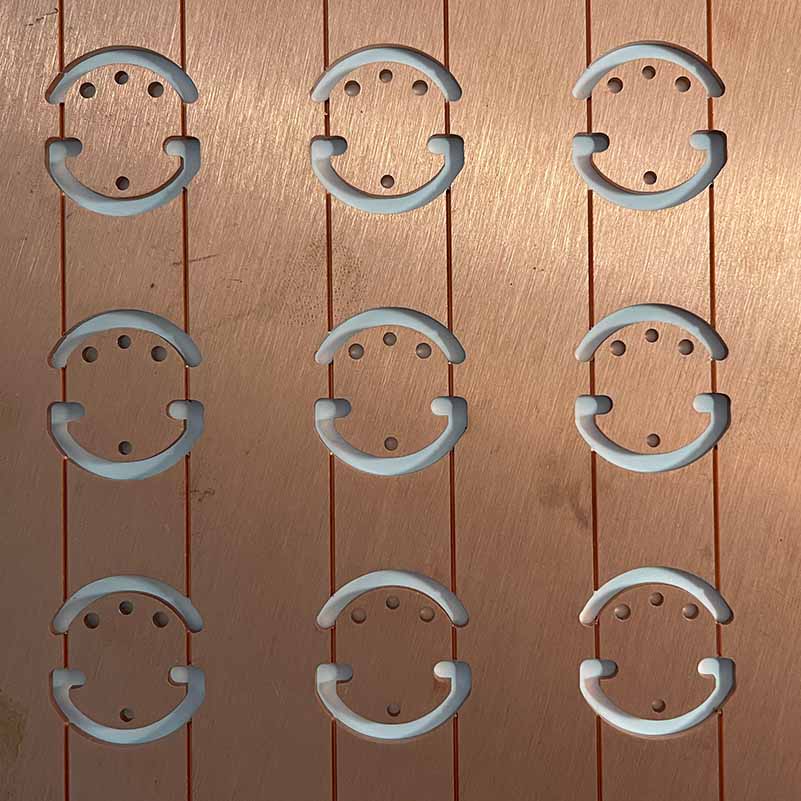
  • Precision machining: Supports blind via,buried via, insulated slotted, Countersink Hole, Z-axis milling, and Pedestal structures.
  • Quality inspection: including appearance inspection, thermal shock test, board flatness test, high voltage test.

We can design different structures based on your requirements.

  • Double-sided Aluminum PCB: Wired on both sides, with the space between the holes filled with resin to achieve insulation, suitable for electronic products with certain requirements for thermal management and more complex circuit logic.
  • Single/double-layer Aluminum PCB: the most common, simplest to manufacture, and suitable for basic thermal management needs.
  • Multi-layer Aluminum PCB: more difficult to manufacture, in very high density design, the overall thermal conductivity compared to single/double layer has decreased.

HXD’s Aluminum PCBs

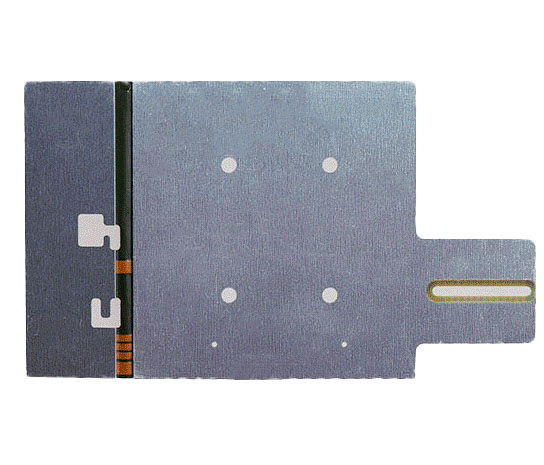
1Layer Aluminum PCB+PI

1Layer Aluminum PCB+PI

Aluminum + PI Hybrid Structure Combines high thermal conductivity with flexible PI, enabling creative designs and flexible interconnections not possible with standard MCPCBs.

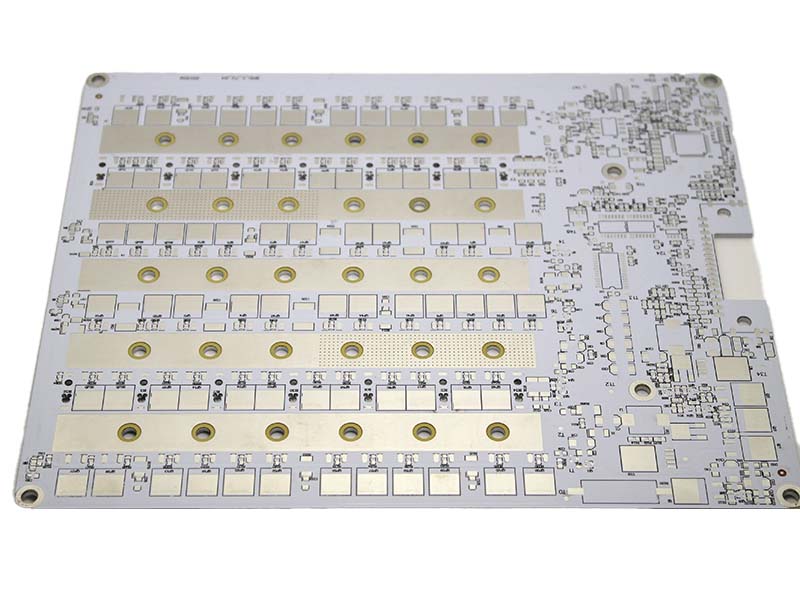
2Layer Aluminum PCB

2Layer Aluminum PCB

Offers improved routing flexibility and electrical performance compared to standard single-layer MCPCBs—ideal for more complex lighting designs.

aluminum-base-pcb

What is Aluminum PCB?

Aluminum PCB is a type of printed circuit board with aluminum as the core substrate.It is designed for high-power and high-heat electronic applications, such as communication equipment and LED lighting.Aluminum has excellent thermal conductivity and quickly transfers heat from the circuit layer to the metal substrate.This helps extend device life and improve overall stability.
Aluminum PCB Structure

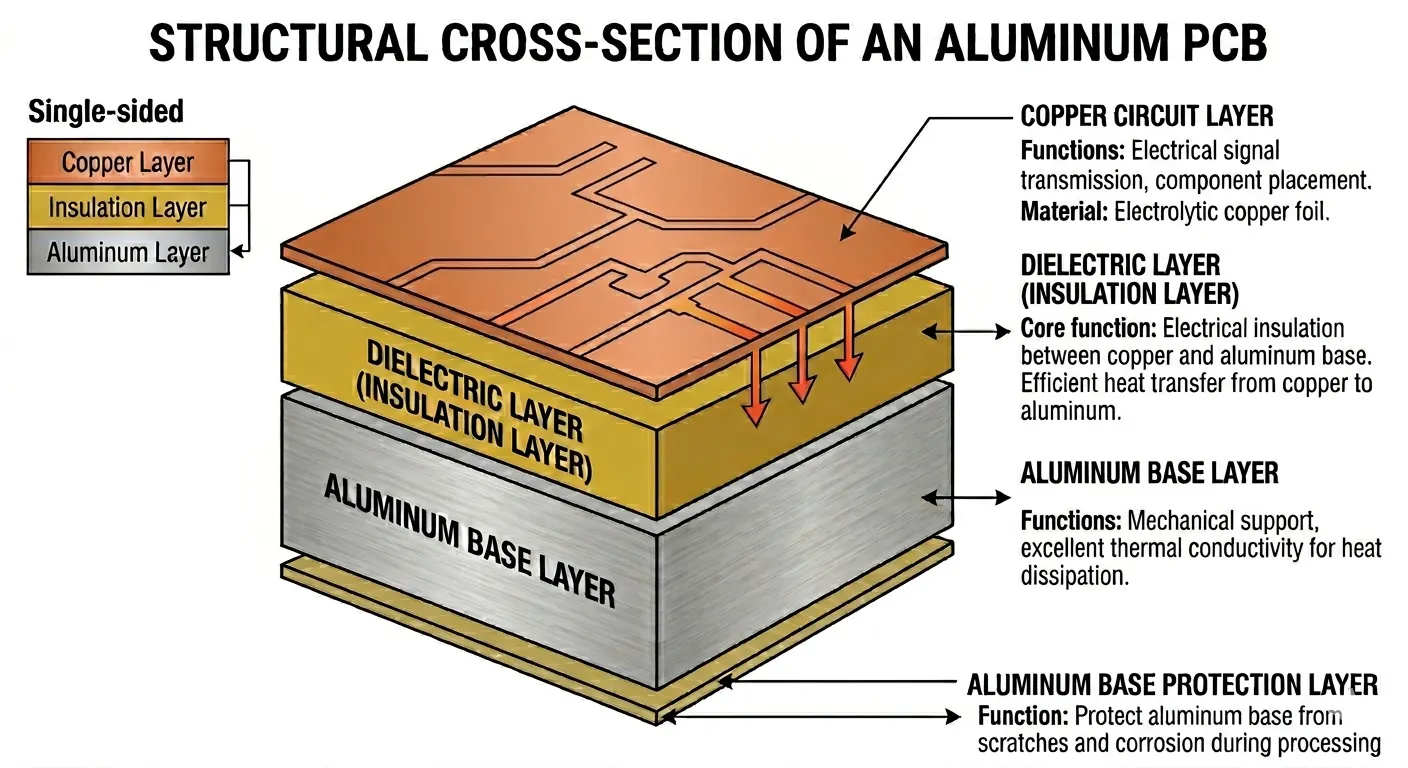
The standard Stackup for Single Aluminum board is made of copper layer, insulation layer and alumunim layer. In some high end application, double layer aluminum PCB will be adopted. The stackup of 2L Aluminum PCB will be following copper layer, insulation layer, alumunim layer and copper. In some special application, mutilayer alumnium PCB will be used.

Copper Circuit Layer:It is the top layer of the PCB and is mainly made of electrolytic copper foil. The thickness is usually between 1 and 10 oz. Thicker copper can carry higher current. Circuit graphics are etched on this layer for component placement and electrical signal transmission.

Dielectric Layer: This is the core functional layer of the aluminum PCB.It is located between the copper foil and the aluminum base. The thickness is about 50-200 µm.Its main function is to provide electrical insulation and transfer heat from the circuit layer to the aluminum base efficiently.

Aluminum Base Layer: This layer mainly provides mechanical support and helps dissipate heat by using the excellent thermal conductivity of aluminum. HXD usually uses aluminum alloys such as 5052 or 6061,with a thickness  generally between 0.5 mm and 3.0 mm. The most common thicknesses are 1.0 mm, 1.5 mm, and 2.0 mm.

Aluminum Base Protection Layer: This is an optional layer, usually added during processing, to protect the surface of the aluminum base from scratches, corrosion, and to provide

Key Advantages of Aluminum PCB

Thermal Performance

Aluminum’s thermal conductivity is much higher than FR-4 material, which can quickly conduct and diffuse the heat from the heated parts to the substrate, significantly reducing the local temperature. Its thermal resistance is much lower than ordinary FR-4 boards

Excellent Mechanical Properties

Aluminum has higher strength and toughness than fiberglass or ceramics, making it less prone to breakage during production, handling and use, and has high dimensional stability.

Lightweight

Aluminum is approximately three times lighter than copper, making it ideal for weight-conscious designs (e.g., portable devices, automotive components) as it improves structural strength without adding significant weight.

Cost-effective

Aluminum is a non-toxic, recyclable and natural material. Compared to copper or ceramic substrates, aluminum-based PCBs have a mature manufacturing process and a cost advantage in mass production.

Get started with your next project

We can turn your standard technology PCBs in as fast as in 48 hours.
Start Custom Quote

Applications for Aluminum PCBs

LED Lighting

LED Lighting

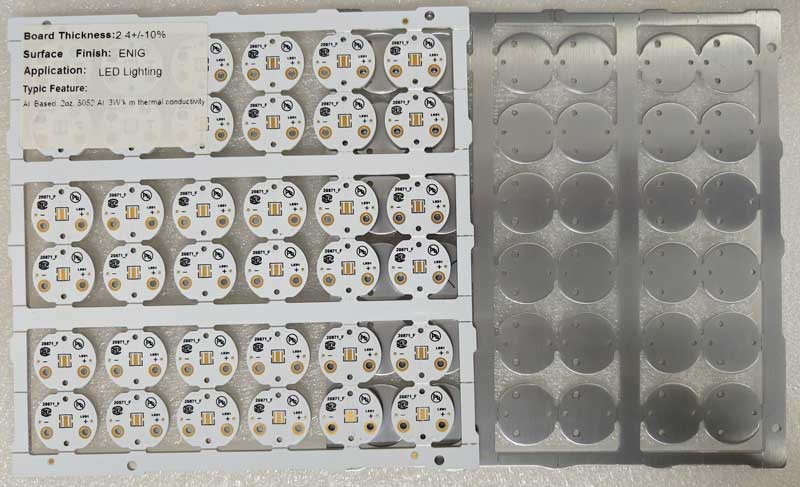
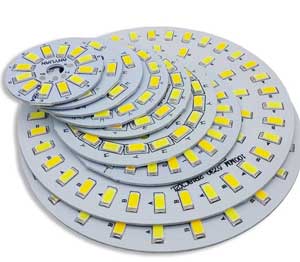
Aluminum PCBs are widely used in high-power lighting applications such as LED street lights, stage lighting, and large backlight modules. With mature manufacturing capabilities, HXD supports extra-long single-sided aluminum PCBs up to 1.2 m or 1.5 m. This helps ensure uniform lighting across the board and long-term reliability of the lamps.

Automotive Electronics

Automotive Electronics

Aluminum PCBs are commonly used in automotive lighting systems, on-board chargers (OBCs), and various types of power units.Aluminum PCBs have excellent heat dissipation performance and mechanical stability, and are able to maintain stable operation under high temperatures, vibration, and long periods of continuous operation.

Consumer Electronics

Consumer Electronics

Aluminum PCBs help achieve efficient heat dissipation in limited space and support thinner and smaller electronic products. Typical applications include power adapters, audio devices, and various consumer electronics

Aluminum PCB Frequently Asked Questions

What is the difference between Aluminum PCB and FR4 PCB?

The key difference is heat dissipation. Standard FR4 PCBs use epoxy glass laminate, which is an insulator with very low thermal conductivity. Aluminum PCBs (MCPCBs) use a metal base to quickly transfer heat away from key components. Their thermal conductivity is usually between 1.0 W/m·K and 3.0 W/m·K, making them ideal for high-power LEDs and power modules.

Which aluminum alloy is better for MCPCB: 5052 or 6061?

It depends on your project requirements. 5052 aluminum alloy is the most commonly used material for aluminum PCBs because it offers excellent machinability and high heat dissipation efficiency. 6061 aluminum alloy provides higher mechanical strength and hardness, making it more suitable for applications with strict structural requirements. For most standard LED lighting projects, 5052 aluminum alloy offers the best balance between cost and thermal performance.

Can Aluminum PCBs be manufactured as double-sided or multilayer boards?

Yes.Although single-sided aluminum PCBs are the industry standard, we also offer manufacturing of double-sided and multilayer aluminum PCBs.

What are the standard thicknesses for Aluminum Base PCBs?

The most common thickness for Aluminum Base PCBs is 1.0 mm and 1.5 mm, but we offer a range from 0.5 mm to 3.0 mm to meet specific mechanical needs,For the copper layer , the standard thickness is 1 oz or 2 oz,though we can provide up to 6 oz heavy copper for high-current power modules.

Why is a white solder mask commonly used on LED Aluminum PCBs?

White solder mask is the first choice for LED aluminum PCBs because it has very high light reflectivity.

It helps maximize light output and brightness by reflecting light that dark colors may absorb.

We use high-quality, anti-yellowing white ink to keep stable reflectivity even under long-term heat exposure.

REQUEST A QUOTE

Supported file formats: PDF, DOC, DOCX, TXT, JPG, PNG (Max 2MB)