
AOI: A Guide to Automated Optical Inspection
 steve ran
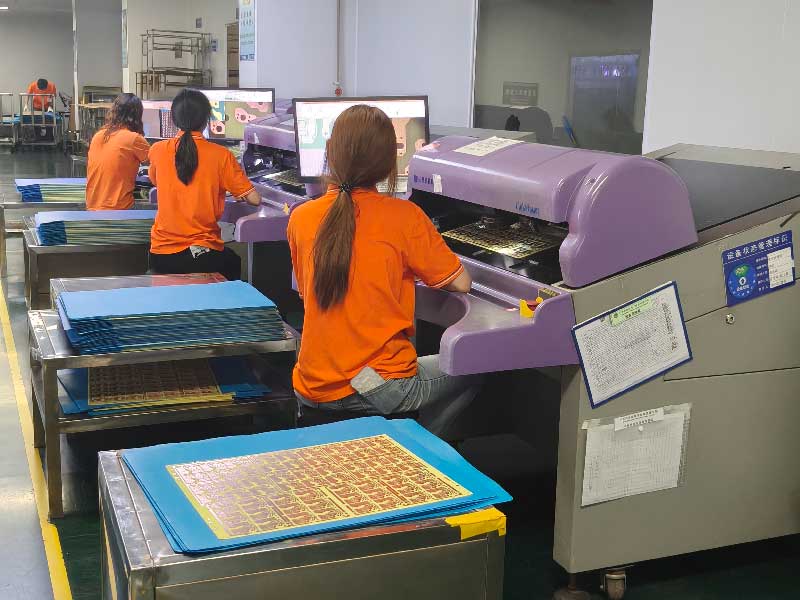
As electronic products become smaller and more complex, the thousands of tiny solder joints on a circuit board have exceeded the limits of human vision. Automated Optical Inspection (AOI) is now a standard requirement for high-quality PCB manufacturers.This article explains how AOI works and what it can detect, helping buyers evaluate a supplier’s quality control capability more effectively.
What is Automated Optical Inspection?
Automated Optical Inspection (AOI) is a vision-based automated quality inspection technology used in electronics manufacturing.It captures detailed images of PCBs with high-resolution cameras and uses software algorithms to compare the PCBS with design files or “golden” standard template, automatically detecting various defects.
How does AOI work?
The AOI process follows four clear steps to ensure quality:
- Image Capture The AOI machine uses a multi-angle RGB (Red, Green, Blue) LED ring light to illuminate the PCB. This highlights the contours of every solder joint. A high-resolution camera then captures a vertical top-down image.
- Data Processing The computer applies advanced algorithms to the captured images. This process removes noise, corrects distortions, and enhances the image for better clarity.
- Analysis & Comparison The software compares the processed image against a Golden Board (a known good sample) or a template created from design parameters (Gerber data).
- Results Reporting Any inconsistencies are flagged as NG (Not Good) for further manual review or repair. Boards that pass are marked as OK and move to the next stage of production.
AOI Inspection Methods
AOI captures images with high-resolution cameras and uses smart software algorithms to compare the actual circuit lines with the design standards. The main inspection methods include:
- CAD/Gerber Comparison: This is the most common method. AOI compares the scanned board images with the original Gerber or CAD design files. If the actual circuit differs from the design—such as a thinner line or a shifted position—the system flags it as a defect.
- Rule-Based Inspection Operators set specific rules in the AOI software. For example: “Minimum line width must be 60μm” or “Minimum spacing must be 100μm.” The machine measures the physical dimensions with micron-level precision and generates a report if any rule is broken.
- Golden Board Matching: The AOI machine compares the board image with a verified “golden board” (a pre-verified perfect sample). Any difference between the two is marked as an anomaly. This method is highly efficient for high-volume production.
By using these methods, AOI can detect micron-level defects, ensuring the performance and reliability of every circuit board.
What Defects Can AOI Detect?
AOI testing is divided into two stages: Bare PCB and PCBA. This ensures quality control from the raw board to the finished product.
1. Bare PCB Manufacturing Stage
Before components are soldered, AOI checks the quality of the circuits and the board itself to ensure the foundation meets all standards:
- Circuit Issues: Includes line width violations, spacing violations, opens, and shorts.
- Copper Defects: Excess copper, copper voids, or etching residue.
- Pads and Holes: Missing or malformed pads, gold finger damage, and hole breakage.
These issues directly affect signal integrity and electrical performance. They are the most critical items to check during the bare board stage.
2. Component Defects (Post-SMT Assembly)
After SMT placement, AOI primarily checks if components are placed correctly and securely:
- Placement Errors: Missing components, offset/skew, incorrect polarity, or flipped/upside-down components.
- Component Accuracy: Verifies that the markings on resistors, capacitors, or ICs match the design values.
3. Solder Defect Detection
AOI can detect various soldering issues that affect electrical connections:
- Solder Volume Issues: Insufficient solder, excessive solder, or “solder skips” (missing solder due to poor wetting).
- Shorts and Bridging: Unintended solder connections between two points.
- Abnormal Shapes: “Tombstoning” (where one end of a component lifts vertically off the board).
- Other Common Issues: Solder balls, paste registration errors, and foreign objects on the board surface.
Advantages of AOI
Compared to manual visual inspection, AOI is faster and eliminates human error caused by fatigue. It can identify subtle defects that are invisible to the naked eye. Key advantages include:
1. Early Defect Detection AOI is typically deployed at critical production stages, such as after etching or before reflow soldering. Finding issues early prevents defective boards from moving into expensive later stages of production.
2. High-Precision Positioning As components become smaller, AOI’s sub-pixel precision is essential. It ensures that even extremely small components, such as 01005 packages, are detected if they are slightly out of position.
3. Great Process Flexibility Operators can easily adjust inspection parameters based on design specifications. This makes AOI suitable for various scenarios, ranging from standard Rigid PCBs to Flexible PCBs (Flex PCB).
Limitations of AOI
Although AOI is an essential quality control tool in modern electronics manufacturing, it has some clear limitations and challenges:
1.Cannot inspect hidden solder joints
AOI is limited to what the camera can see. It cannot inspect solder joints hidden under components, such as QFN or LGA packages, or connections beneath large ground pads. These are considered “blind spots.” Additionally, internal lamination defects in multilayer PCBs cannot be seen by AOI.In these cases, X-Ray inspection is usually required, as it can penetrate materials and reveal hidden solder joints and inner-layer issues.
2.Cannot replace electrical testing
AOI does not measure electrical parameters like resistance, capacitance, or inductance. To confirm a PCB’s proper functioning, in-circuit testing (ICT) or functional testing is still necessary.
3.Cost and labor considerations
For small-batch production, programming and setting up AOI may take longer than manual visual inspection, making it less cost-effective. 3D AOI systems are even more complex, requiring trained personnel for setup and programming.
AOI is a powerful visual inspection technology, but to achieve a complete quality assurance system, it is typically combined with X-Ray, ICT, E-test and manual inspection.
Conclusion
For PCB buyers, choosing a supplier is not just about comparing prices—it is about assessing their risk control capabilities. In high-density and multi-layer boards, internal circuits are hidden, making AOI technology critical for ensuring batch quality.
At HXD, we utilize sub-pixel precision AOI equipment at every critical stage, from bare board etching to final assembly. By detecting micron-level defects early, we ensure that every batch delivered meets the strictest IPC standards.
Frequently Asked Questions
What is a “Golden Board”?
Before starting mass production, manufacturers verify a single PCB that perfectly meets all design and manufacturing specifications. This is usually done through manual inspection or First Article Inspection (FAI).
Once verified, the AOI machine performs a high-precision scan of this perfect board to collect image data. This data is then stored as the “Golden Template” or “Golden Standard.” The machine uses this template as the master reference to judge the quality and consistency of every other board in the production run.
Should I choose In-line AOI or Off-line AOI?
It depends on your production volume:
-
On-line AOI: These systems are integrated directly into the SMT assembly line. They allow for high-speed, 100% inspection without stopping the flow of the boards. This is the best choice for high-volume, mass production.
-
Off-line AOI: These machines operate independently from the assembly line. They are better suited for High-Mix, Low-Volume (HMLV) manufacturing, prototyping, or batch testing. In these scenarios, flexibility is more important than continuous throughput.
What is the difference between 2D and 3D AOI?
The main difference lies in the “depth” of the data captured:
-
2D AOI: Primarily detects defects on a flat plane. It is excellent for identifying missing components, offsets (shifts), polarity errors, and shorts.
-
3D AOI: Adds height measurement to the inspection. In addition to 2D features, it can detect lifted leads, tombstoning, and abnormal solder volume.
What should I look for when choosing a PCB manufacturer with API capability?
When evaluating a PCB manufacturer’s AOI capability, look for: AOI at multiple production stages (inner layer, outer layer, and post-assembly, not just one pass); documented defect data reporting — reputable manufacturers provide AOI pass/fail reports with each order; machine specifications such as resolution (≤10 µm per pixel is standard for fine-pitch work); and false-positive management — a well-tuned AOI program avoids unnecessary rework. Manufacturers should also perform 100% electrical testing in addition to AOI, as optical inspection alone does not verify circuit functionality.
written by
steve ran
Senior Layout Manager