
Introduction to Electrical Test (E-test)
 steve ran
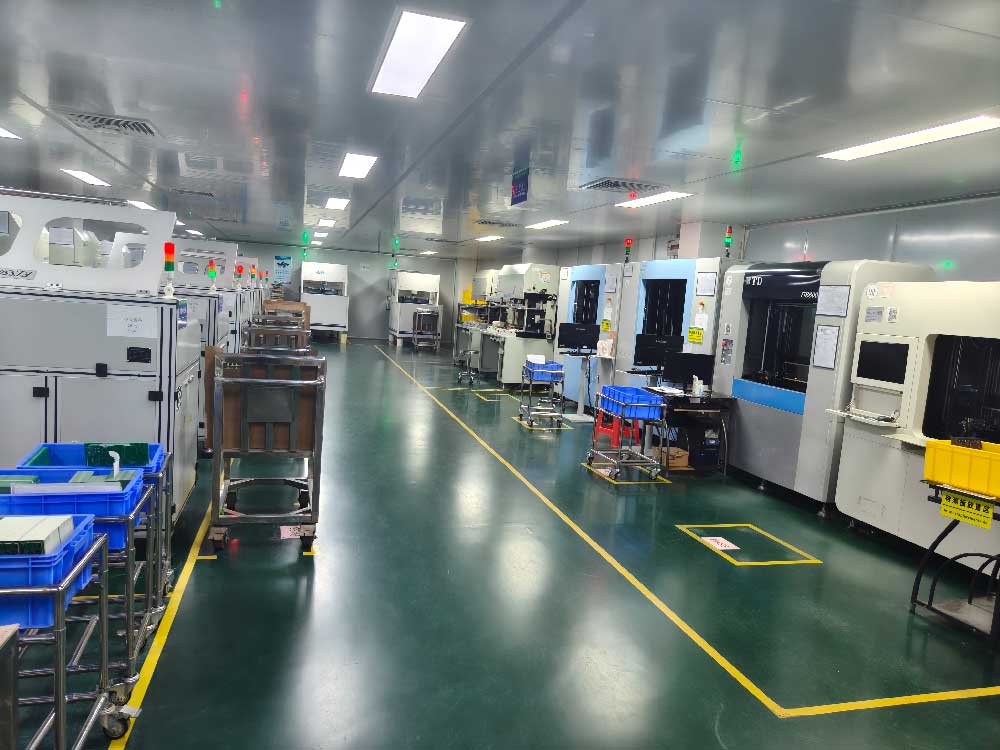
While AOI is excellent for finding surface defects, only Electrical Testing(E-test) can check inside multilayer PCBs and detect hidden connection issues in vias or inner layers.
This guide explains the core functions of E-Test and why it is a critical step in quality control. Our goal is to help PCB procurement professionals make more informed decisions when evaluating a supplier’s technical capabilities.
What is E-test?
E-Test is the final critical step in the Bare PCB manufacturing process. Unlike AOI, E-Test does not focus on appearance or solder quality. Instead, it focuses entirely on electrical connectivity, ensuring the PCB’s performance matches the original design requirements.
E-Test is also an effective cost-control method. Finding defects at the bare board stage has the lowest cost. If defective PCBs move into assembly(SMT), the loss-including wasted components and labor- can increase dozens of times.
Core Functions of E-Test
The core value of E-Test is demonstrated through these three key dimensions:
1. Design Fidelity and Netlist Verification
The primary mission of E-Test is to verify that the physical board matches the original design. The test equipment uses the Netlist (usually in IPC-356 or IPC-2581 format) as the master reference to check every connection on the circuit board.
- Point-by-Point Comparison: Moving probes systematically check every Net (electrical path) on the PCB to verify its actual connection.
- Ensuring Design Intent: This process ensures that the physical paths formed by copper traces, pads, and vias follow the exact electrical logic defined in the schematic. It guarantees that all circuits are interconnected correctly.
2.Fundamental Defect Detection
E-Test can detect critical defects that directly affect the basic functionality of a PCB:
- Opens Test: This identifies Open Circuits caused by over-etching, drill misalignment, or broken internal traces. It prevents functional failure by ensuring current can flow through the entire designed path.
- Shorts Test: This detects unintended connections between separate networks. It identifies risks such as leakage or short circuits caused by residual copper or solder splashes.
- Basic Parameter Measurement: Beyond simple continuity, the system measures electrical characteristics like Resistance, Inductance, and Capacitance (R/L/C), as well as diode values. This ensures that all conductors and components remain within the design’s specific tolerance range.
3. Reliability for Multilayer PCBs
E-Test is the only effective way to verify the electrical reliability of multilayer PCBs. It accurately detects tiny cracks or misconnections hidden deep within internal traces.It is especially critical for inspecting Blind and Buried Vias, where physical defects are invisible to the eye and traditional optical tools.
E-Test Methods
Depending on production scale and specific requirements, E-Test is typically performed using one of the following two methods:
Flying Probe Testing (FPT)
This method uses 2 to 8 software-controlled mobile probes. These probes “fly” across the board and touch test points one by one according to programmed instructions.
Fixture / Bed of Nails Testing
This method uses a custom-built template filled with many spring-loaded Pogo pins. It contacts hundreds or thousands of test points on the board all at once.
The differences between the two are shown in the table below.
| Feature | Flying Probe Testing | Fixture / Bed of Nails |
| Tooling Required | None. Managed entirely by software and robotic probes. | Required. A custom “Bed of Nails” with spring-loaded pogo pins. |
| Setup Cost | 0 | High (One-time tooling fee) |
| Lead Time | Extremely Short. Programming takes only a few hours. | Long |
| Test Speed | Slower. Point-by-point (1–15 mins per board). | Extremely Fast. Simultaneous testing (5–40 secs per board). |
| Flexibility | Very High | Low. Design changes usually require a brand-new fixture. |
| Test Pitch | Smaller. Supports high-density designs down to 4 mil (0.1mm). | Larger. Typically supports spacing down to 20 mil (0.5mm). |
| Best Used For | Prototyping, and small-to-medium batches. | Large-scale mass production for mature designs. |
The primary advantage of FPT is that it requires no custom fixtures. If your design changes frequently, flying probe testing is the best choice. It saves you significant upfront investment and eliminates the waiting time for tool manufacturing.
Fixture testing requires a high upfront cost, but in large-scale production, its very high testing speed spreads the fixture cost quickly, offering excellent cost efficiency.In terms of technical capability, FPT uses a high-precision motion control system, it can handle a much finer pitch. This makes it perfect for high-density PCB designs.
Advanced Testing Items
For high-reliability applications—such as Aerospace, Medical, and Automotive—E-Test includes higher-precision measurements to ensure zero-failure performance:
1. 4-wire Kelvin testing
Uses four separate probes, divided into two groups:
- Source Probes: Connected to both ends of the component to provide a precise constant current.
- Sense Probes: Placed on the sample to measure voltage drop.
During testing, the current probes pass a constant current, while the voltage probes measure the voltage across the sample. Because the voltmeter has very high impedance, almost no current flows through the measurement path, giving an accurate voltage drop. The resistance is then calculated using Ohm’s law (R = V/I).
2. Impedance Testing (TDR)
For high-speed designs, signal integrity is critical. The primary tool used is the Time Domain Reflectometer (TDR).
- The TDR sends a fast-rising “step signal” through the transmission line.
- It monitors the waveforms reflected back from any points where the impedance changes.
- By analyzing the timing and shape of these reflections, the TDR can calculate the exact impedance and pinpoint the location of any signal bottlenecks.
3. Hi-Pot Testing (High Potential)
This test applies high voltage (typically 500V to 3000V) between separate networks. It checks if the dielectric (insulating) material will break down or leak current under high-voltage stress. This is a vital safety test for power-related electronics.
What is the difference between E-Test and AOI?
E-Test and AOI are complementary, not substitutes.AOI finds visual defects, while E-Test finds electrical defects.E-Test ensures every circuit path can transmit signals correctly and remain stable under high voltage.Below is a detailed comparison between E-Test and AOI:
| Feature | AOI | E-Test |
|---|---|---|
| Principle | Uses high-definition cameras to capture images and compare them against a “Golden Board.” | Uses electrical probes (Flying Probe or Bed of Nails) to apply signals based on a Netlist. |
| Inspection Focus | Appearance & Surface Defects: Scratches, pad contamination, component offset, and polarity errors. | Function & Parameters: Focuses on Opens, Shorts, resistance, and capacitance. |
| Detection Depth | Surface Only. Limited to what the camera can see. | Internal Layers. Verifies all hidden traces and vias within the board. |
| Core Reference | Primarily relies on Gerber image data or visual features of a master sample. | Relies on Netlist files (e.g., IPC-D-356, ODB++, etc.) for electrical logic. |
| Application Stage | Used at multiple stages throughout PCB fabrication and SMT assembly. | Typically the final gatekeeper of Bare PCB manufacturing. |
Conclusion
E-Test is a required step to ensure PCBs meet industry standards such as IPC-9252. It is especially critical for high-reliability applications in medical, aerospace, and automotive fields.
When selecting a PCB supplier, it is important to consider whether they have a mature, standardized E-Test process and whether they can provide flexible testing solutions tailored to different project requirements.
At HXD, we provide complete test documentation for every batch according to customer needs, including:
- E-Test reports: Fully verify electrical connectivity and performance.
- TDR impedance data: Ensure signal integrity for high-speed and high-frequency circuits.
- Micro-section analysis: Show lamination structure and via/copper quality clearly.
- Certificate of Compliance (CoC): Confirm products meet order specifications and relevant industry standards.
written by
steve ran
Senior Layout Manager