
Strip Line Overview
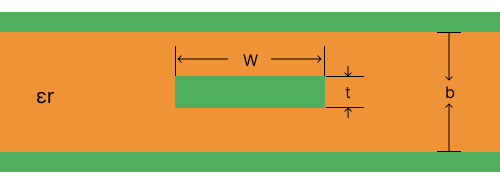
A stripline is a transmission line built inside a PCB, where the signal trace is placed between two ground planes. This fully enclosed structure helps reduce noise, limit signal loss, and keep performance stable. Because of these advantages, stripline is widely used in high-speed and high-frequency designs, such as data communication, networking equipment, and complex electronic systems.
Designing a stripline with the right impedance is critical for reliable signal transmission. Even small changes in trace width, spacing, or dielectric thickness can affect performance. That is why engineers need a fast and simple way to estimate these values during the design stage.
This PCB Strip Line Calculator is built to help you quickly estimate key parameters, including impedance, trace width, and spacing. Instead of relying on slow manual calculations, you can get instant results and adjust your design in seconds. This makes it easier to compare different stackup options and find the best solution for your project.
Whether you are working on a new design or optimizing an existing PCB, this tool helps you save time and reduce errors. It is especially useful when you need quick answers before sending your design for manufacturing. Start using this PCB Strip Line Calculator to improve your workflow, make better design decisions, and achieve more reliable signal performance.