
PCB Surface Finishes Guide (2026)
 steve ran
April 4, 2026
steve ran
April 4, 2026
Introduction
Choosing a PCB surface finish is one of the most important decisions in board manufacturing. It affects soldering quality, assembly yield, long-term reliability, and total product cost.
This guide gives practical, actionable selection advice based on four key factors: cost, performance, reliability, and application needs. Instead of only listing finish types, we will help you choose the right option for your actual product and manufacturing conditions.
Types of PCB Surface Finishes
HASL and Lead-Free HASL
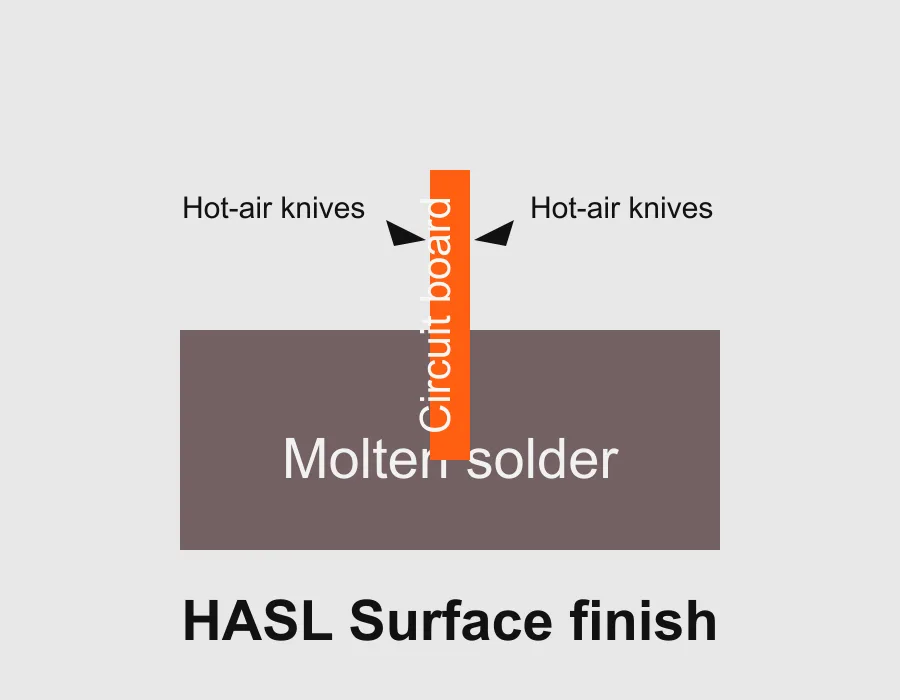
HASL is a traditional and widely used PCB surface finish. In this process, the bare board is dipped into molten solder, usually a tin-lead alloy (63% tin and 37% lead). Then, hot air knives blow off the extra solder and level the surface.
Lead-free HASL follows the same process, but uses lead-free alloys,to meet RoHS environmental standards.
ENIG (Electroless Nickel Immersion Gold)
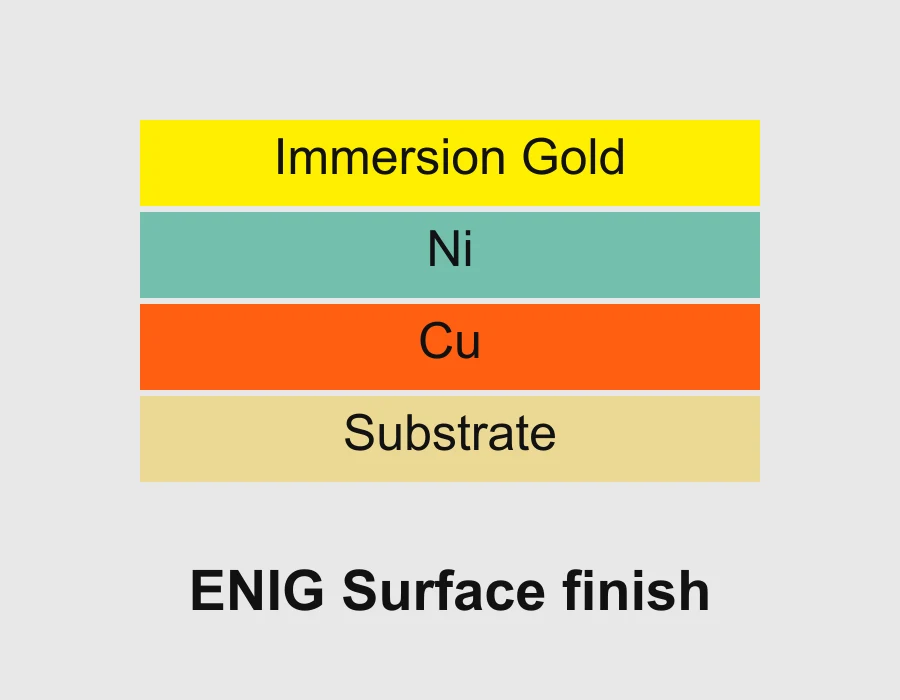
ENIG has two metal layers. First, a layer of nickel (Ni) is deposited on the bare copper using a chemical process. Then, a thin layer of gold (Au) is added on top of the nickel through an immersion process.
Nickel layer: The thickness is usually 3–6 μm (120–240 μin). It acts as a barrier between copper and gold. It prevents them from mixing and provides a base for soldering.
Gold layer: The thickness is usually 0.05–0.125 μm (2–5 μin). Its main job is to protect the nickel from oxidation during storage, so the board stays easy to solder.
ENIG provides a very smooth surface and has a long shelf life.
OSP (Organic Solderability Preservative)
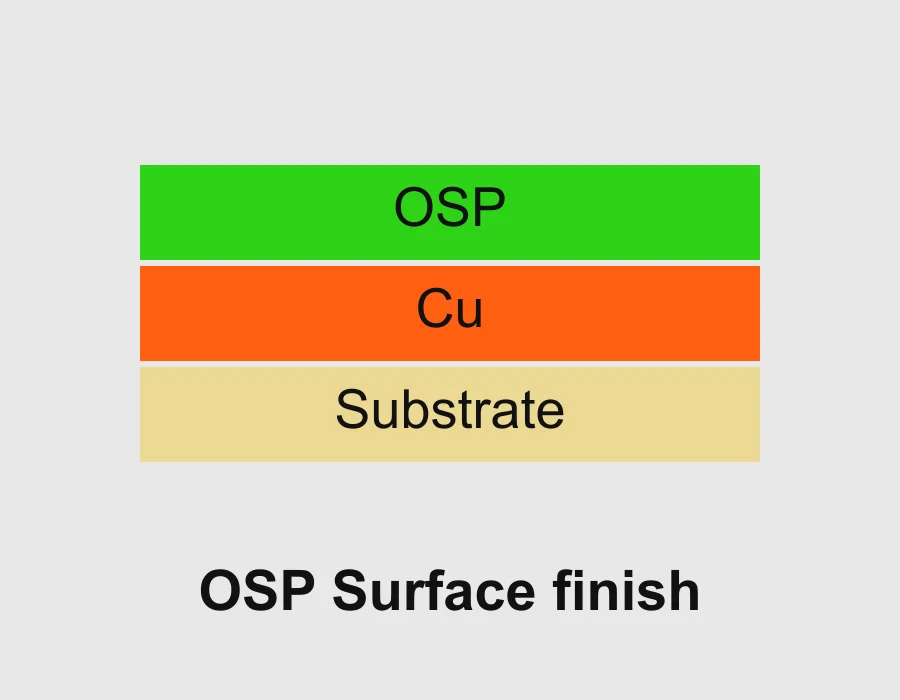
OSP is an organic surface finish used in PCB manufacturing. It adds a very thin and clear organic layer on the bare copper surface. This layer protects the copper from oxidation when exposed to air. Among all lead-free surface finishes, OSP is one of the lowest-cost options.
ENEPIG (Electroless Nickel Electroless Palladium Immersion Gold)
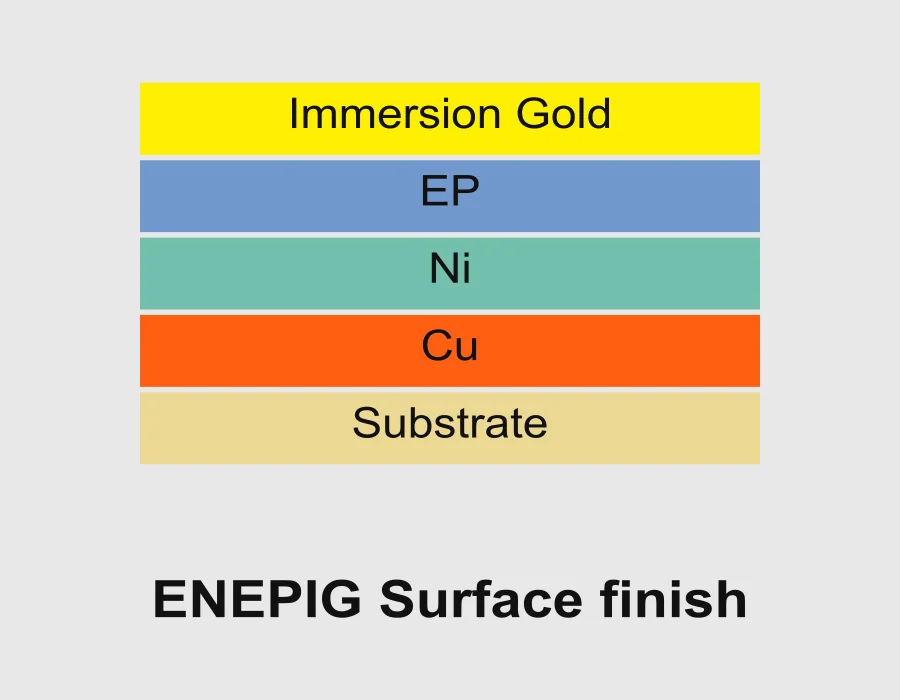
ENEPIG is an advanced surface finish based on ENIG. In ENIG, the gold layer can over-etch the nickel layer during plating. This may result in a problem known as “black pad.”
ENEPIG adds a palladium layer between the nickel and gold. This palladium layer acts as a barrier and protects the nickel from being corroded by the gold. As a result, it helps prevent the black pad issue.
Immersion Silver
Immersion Silver is a metal finish. It uses a chemical process to add a thin layer of pure silver on bare copper in a PCB. It offers excellent signal integrity and very good flatness. It is a preferred choice for high-frequency signals, RF, and 5G communication designs.
Immersion Tin
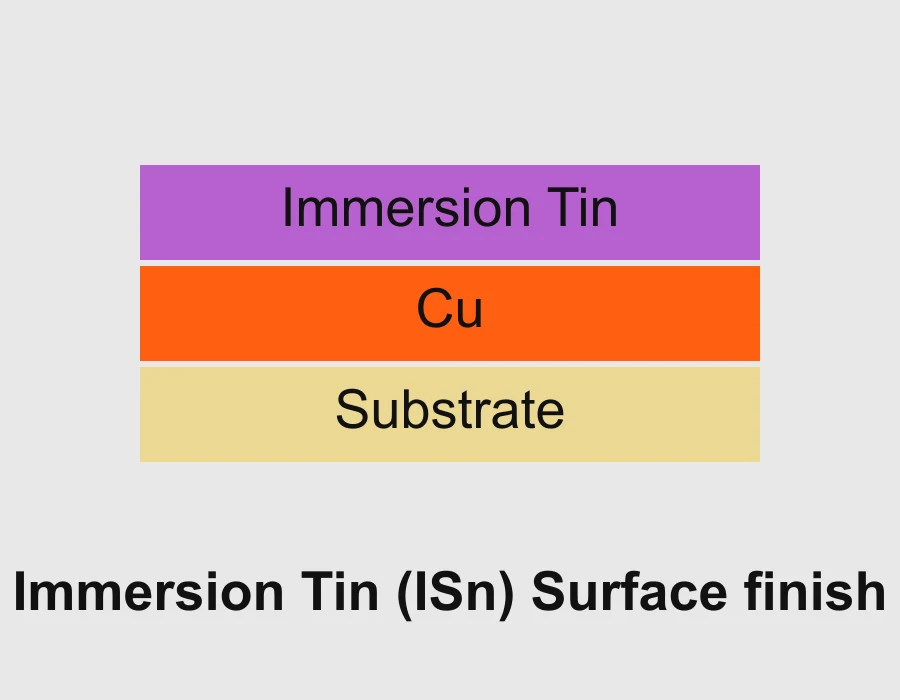
Immersion Tin is a metal surface finish that deposits a thin layer of tin directly on the bare copper of a PCB. It is a lead-free process and meets RoHS environmental standards. This surface is very sensitive. Finger contact can easily damage it. This includes issues like fingerprints, stains, or discoloration. Improper handling can also cause harm. Gloves must be worn during handling.
Hard Gold & Soft Gold
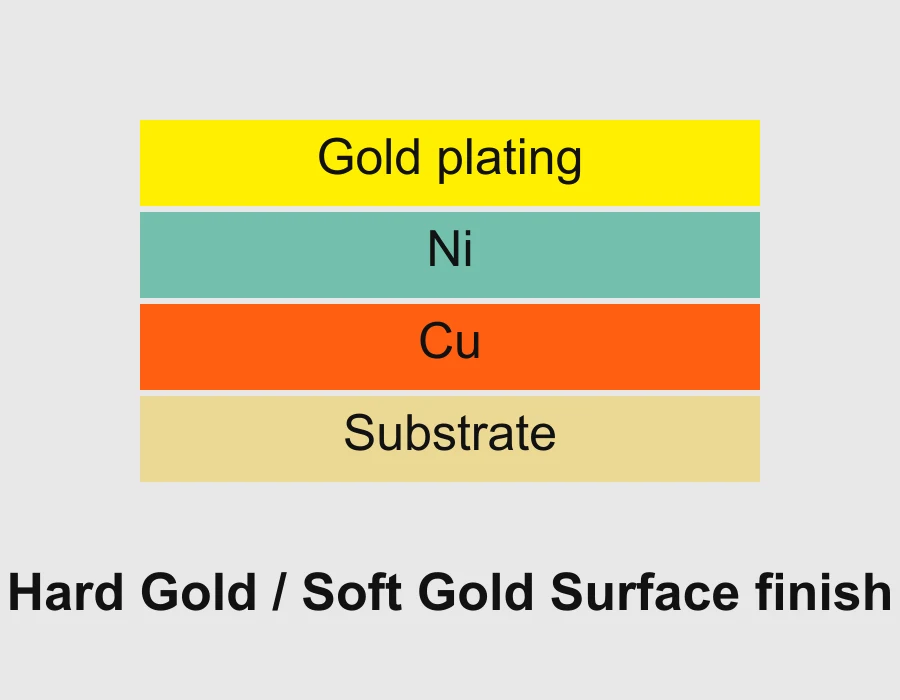
Hard Gold is used where plugging and unplugging happen often. It’s common in edge connectors. You’ll also find it in battery contacts, keyboards, and test boards. It has poor solderability and is usually not used for soldering points.
Soft Gold can create stronger solder joints than hard gold. It’s often used in precise parts. These need high electrical conductivity. They also require great soldering performance.
ISIG (Immersion Silver Immersion Gold)
ISIG fully removes the magnetic nickel layer. This layer can lead to signal loss in high-frequency settings. It is very suitable for high-speed and high-frequency signal transmission. The cost of ISIG is usually much higher than other surface finishes, and only a small number of suppliers can offer this process.
PCB Surface Finish Comparison
This table compares common PCB surface finishes by solderability, flatness, fine-pitch suitability, shelf life, rework, wire bonding, baking, and contact applications. It helps designers choose the right finish for different PCB assembly needs.
Table 1: Surface Finish Basic Properties
| Surface Finish | Thickness of Deposit | Solderability Performance | Handling Concerns | Fine Pitch / Small BGA & SMD | Excellent Flatness | Press Fit | Suitable for Peelable |
|---|---|---|---|---|---|---|---|
| Pb-F HASL | 1-40 | YYY | Y | Y | |||
| SnPb HASL | 1-40 | YYY | Y | Y | |||
| Flash Gold | Au: 0.025-0.125 Ni: 3-6 | Y | Y | Y | Y | ||
| OSP | 0.2-0.65 | Y | Y | Y | Y | ||
| ENIG | Au: 0.05-0.125 Ni: 3-6 | Y | Y | Y | Y | Y | |
| ENEPIG | Ni: 3-8μm Pd: 0.05-0.3μm Au: 0.05-0.125μm | Y | Y | Y | Y | Y | |
| Immersion Tin | 1.0-1.2 | Y | Y | Y | Y | Y | |
| Immersion Silver | 0.12-0.4 | Y | Y | Y | Y | Y | |
| OSP + Immersion Gold | OSP: 0.2-0.65 Ni: 3.0-6.0 Au: 0.05-0.125 | Y | Y | Y | Y | ||
| Carbon | 8-25 | NA | NA | NA | Y | ||
| Edge Hard Gold Contacts | Au: 0.8-1.5 Ni: ≥ 2.5 | NA | NA | Y | NA | Y | |
| Internal Hard Gold Contacts | Au: 0.25-0.75 Ni: ≥ 2.5 | NA | NA | Y | NA | Y |
Table 1: Surface Finish Reliability and Notes
| Surface Finish | Shelf Life Concerns | Assembly Rework | Wire Bonding | Suitable for Baking | Comments |
|---|---|---|---|---|---|
| Pb-F HASL | Y | Y | Bridging on fine pitch, avoid on thin PCB | ||
| SnPb HASL | Y | Y | Bridging on fine pitch, avoid on thin PCB | ||
| Flash Gold | Y (Alu) | Y | |||
| OSP | Y | Short operating window, storage limits | |||
| ENIG | Y | Y (Alu) | Y | Avoid solder mask defined BGA | |
| ENEPIG | Y | Y (Alu) | Y | ||
| Immersion Tin | Aggressive to solder mask, use > 0.125mm dam | ||||
| Immersion Silver | Y | Short operating window, high-speed PCB | |||
| OSP + Immersion Gold | Y | Short operating window, storage limits | |||
| Carbon | NA | Y | Contacts | ||
| Edge Hard Gold Contacts | NA | Y | Contacts | ||
| Internal Hard Gold Contacts | NA | Y | Contacts, need space to track out to edge |
IPC Standards You Should Use in Surface Finish Specs
IPC-4552
IPC-4552 is an industry standard for ENIG surface finish. It outlines the thickness range for the nickel and gold layers. It also covers the plating structure and the requirements for solderability and reliability. The standard focuses on coating uniformity, interface quality, and defect control (such as black pad). It’s commonly used in BGA and high-reliability PCB designs. This guideline helps ensure good soldering performance and long-term stability.
IPC-4553
IPC-4553 is an industry standard for Immersion Silver surface finish. It outlines the thickness range for the silver layer. It includes surface cleanliness, solderability, and the requirements for storage and packaging. The standard focuses on preventing contamination and resisting tarnish. It guarantees that immersion silver PCBs perform well during soldering. This stability is crucial for high-frequency applications and accurate assembly. It is an important guideline for evaluating the quality of the immersion silver process.
IPC-4556
IPC-4556 is an industry standard for ENEPIG surface finish. It sets the thickness range for nickel, palladium, and gold layers. It also outlines requirements for coating uniformity, solderability, and reliability. The standard focuses on interface stability and corrosion resistance. It can reduce the risk of black pad. It is widely used in high-reliability products, gold wire bonding, and high-end electronics. It is an important guideline for evaluating ENEPIG process quality.
IPC-4554
IPC-4554 is an industry standard for Immersion Tin surface finish. It defines the thickness range of the tin layer, coating uniformity, solderability, and requirements for storage and oxidation resistance.The standard focuses on the stability of the tin layer and preventing metal diffusion issues. It ensures good soldering performance even after multiple reflow processes. IPC-4554 is often used in PCBs that require good press-fit performance and fine-pitch assembly. It is an important guideline for evaluating the quality of the immersion tin process.
IPC-1601 A
For sensitive processes like OSP, immersion silver, and immersion tin, follow the storage and handling guidelines closely. This helps prevent discoloration or damage.
The Black Pad issue in ENIG, and why ENEPIG gets attention
In PCB ENIG processing, Black Pad is a common and high-risk failure issue. Under normal conditions, gold is deposited on top of the nickel layer. But when process control becomes unstable, such as pH or temperature drifting out of range, the gold replacement reaction can attack the nickel too aggressively. The damaged nickel surface then oxidizes and appears dark under a microscope. This is what we call Black Pad.
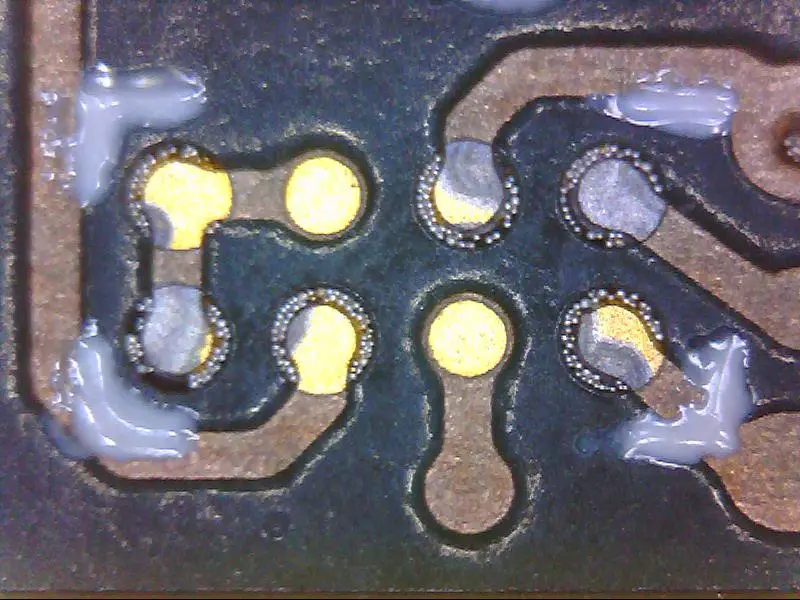
This dark, corroded surface makes it hard for solder and nickel to form a strong and complete intermetallic bond. As a result, solder joint strength drops. Under mechanical stress, thermal cycling, or vibration, these weak joints are more likely to crack and cause PCB failure.
In real manufacturing, tight control of ENIG process parameters can reduce the chance of Black Pad, but it is hard to remove the risk completely in ENIG systems. A more reliable solution used in the industry is ENEPIG (Electroless Nickel Electroless Palladium Immersion Gold). ENEPIG adds a palladium layer between nickel and gold. This palladium layer works as a protective barrier and prevents excessive attack on the nickel during gold deposition. In practice, this greatly reduces and effectively avoids Black Pad risk.
Best Surface Finish for High-Frequency PCB
In high-frequency applications, choose a surface finish that has low signal loss. It should also avoid magnetic interference and provide good flatness.
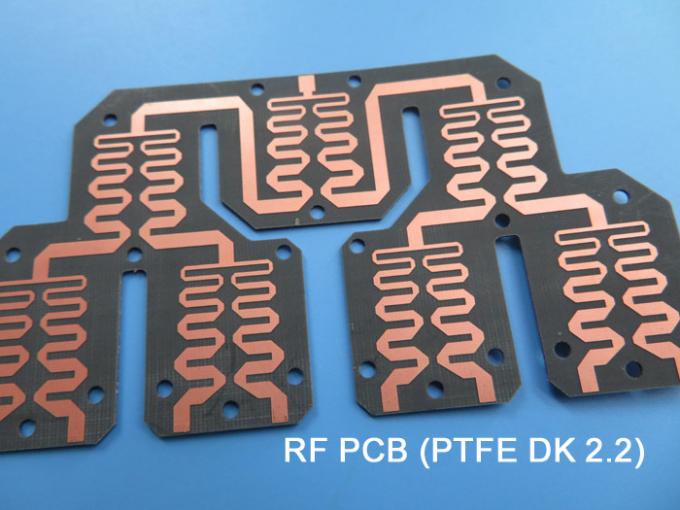
Immersion Silver is a top choice for high-frequency, RF, and 5G applications. It skips the nickel layer. This choice helps avoid magnetic effects that can weaken high-frequency signals. Silver also has very good electrical conductivity, which helps reduce signal loss. Immersion silver gives a very flat surface. This makes it perfect for fine-pitch components and BGA packages. It is sensitive to the environment and can tarnish easily, so it needs careful storage and handling.
For high-reliability applications like 5G base stations, ENIG and ENEPIG are popular options. Both offer excellent flatness and work well for high-density SMT assembly. ENEPIG adds a palladium layer between nickel and gold. This reduces the risk of black pads in ENIG. It can also boost performance at high frequencies. Both still use a nickel layer, so they often have more signal loss than immersion silver.
For more advanced designs, ISIG is a newer option for high-speed applications. It has no nickel layer, so it performs better in high-frequency conditions. It combines silver’s high conductivity with gold’s protection. Plus, it provides good flatness and reliability. It supports gold and aluminum wire bonding. This makes it great for high-performance designs.
How to Choose the Right PCB Surface Finish for Your Project
When choosing a PCB surface finish, it is important to check the specific application. Different processes vary in cost, manufacturability, and electrical performance. The right choice can greatly improve product quality and long-term stability.
Budget limits:
If cost is the main concern and the circuit design is simple, HASL is usually a cost-effective option. If you need RoHS compliance and a low-cost solution, OSP is a better choice.
Component density and flatness:
For designs with BGA or fine-pitch parts smaller than 0.5 mm, a flatter surface finish is required. Options like ENIG, OSP, or immersion silver help improve assembly accuracy and reduce the risk of solder bridging.
Operating environment:
If the PCB is in tough conditions like high humidity or heat, ENIG or ENEPIG is better. They have a nickel-gold or nickel-palladium-gold structure that resists corrosion well.
Signal integrity (high frequency / RF):
For applications above 1 GHz, immersion silver is recommended. Immersion silver has an advantage over nickel-based finishes like ENIG. It lacks magnetic nickel, which helps cut down on signal loss from the skin effect.
Shelf life requirements:
If the PCB needs to be stored for a long time before assembly, ENIG, ENEPIG, or hard gold can provide more than 12 months of stable shelf life. OSP and immersion tin usually need to be assembled within 1–6 months.
Multiple reflow capability:
For complex PCBs needing several high-temperature reflow cycles, ENIG, ENEPIG, and immersion tin work better. They keep good solderability even after repeated heating.
Gold fingers / mechanical contacts:
Use electroplated hard gold for contact areas that need frequent plugging and wear resistance. This is essential for parts like edge connectors and buttons to ensure durability.
In conclusion, there is no single best PCB surface finish. The right choice depends on balancing cost, performance, and reliability. Choosing the right process for each application is crucial. It ensures top product performance and lasting stability.
Get expert help choosing the right PCB surface finish for your project.
Conclusion
We suggest that you talk with your PCB supplier early in the design stage and get real process capability data and reliability proof. This helps you choose the right surface finish so it matches your design needs, assembly process, storage conditions, and product lifetime goals.