
Ultimate Guide to Impedance Control
 steve ran
February 4, 2026
steve ran
February 4, 2026
Impedance control is important in PCB design and manufacturing. It keeps signals stable during transmission and reduces noise, reflection, and signal loss.
For PCB designers, poor impedance control can cause signal reflection, higher crosstalk, and failed functional tests. This guide focuses on practical design needs and explains the key rules of PCB impedance control.
What is Impedance Control in PCB?
We measure impedance in ohms (Ω), similar to resistance, but impedance and resistance are not the same. Resistance applies to DC, or direct current. Impedance applies to AC, or alternating current, and high-frequency signals. It includes three factors: resistance, capacitance, and inductance.
In high-speed and high-frequency PCB design, impedance is an important electrical parameter. It helps signals move across the board with less loss, reflection, and distortion.
In a circuit, Impedance Control means matching the trace dimensions and location with the PCB material properties. The goal is to ensure that signals remain noise-free and do not lose strength during transmission.
Key Factors That Affect PCB Impedance
We group the factors that change impedance into three categories: dimensions, materials, and design structure.
1. Physical Factors
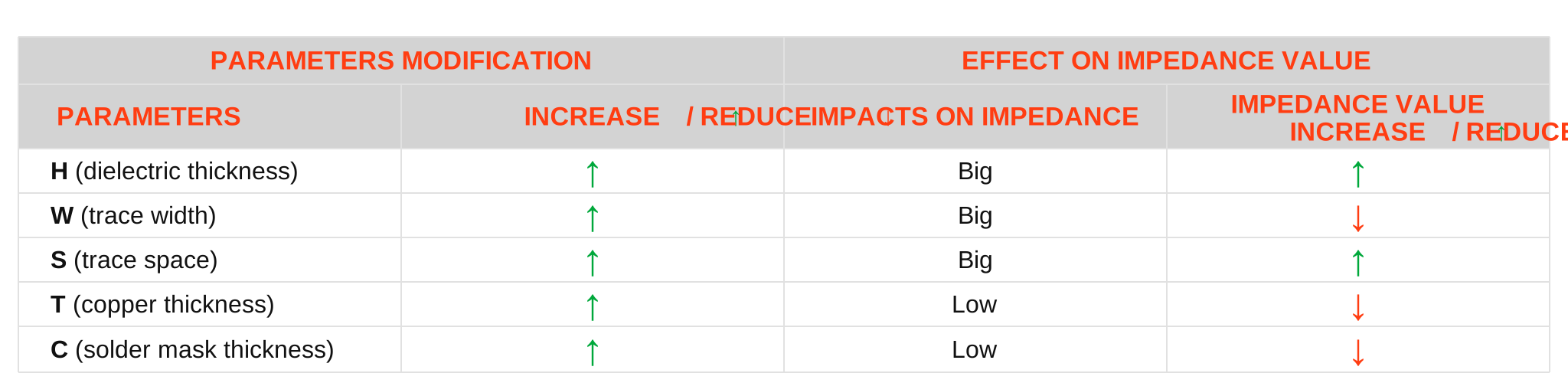
- PCB impedance changes when stackup parameters change. Dielectric thickness, trace width, trace spacing, copper thickness, and solder mask thickness all affect the final impedance value.
- In general, thicker dielectric and larger trace spacing increase impedance, while wider traces, thicker copper, and thicker solder mask reduce impedance. Designers should confirm these values before routing.
Relationship between parameters and impedance value
When you need to calculate trace width, you can use our online tool.
2. Material Properties
- Dielectric Thickness: Thicker dielectric layers (Core or Prepreg) result in higher impedance. The final thickness depends on pressure and resin flow during lamination.
- Dielectric Constant: A higher Dielectric Constant results in lower impedance. This value can change based on the frequency, resin content, and the type of glass fabric used in the board.
3.Microstrip&Stripline
In PCB stackup design, Microstrip and Stripline are the two basic structures used for controlled impedance. The main difference is the position of the signal trace relative to the reference planes (Ground or Power layers).
For outer-layer Microstrips, the copper traces are covered by a layer of Solder Mask (green oil).
Use Stripline for high-speed signals that need better stability and EMI control. Use Microstrip for simpler routing or standard signals. When Microstrip stays close to a ground plane, it can still provide reliable impedance control and signal performance.
For quick design checks, use our PCB Strip Line Calculator or PCB Microstrip Line Calculator. They help you estimate impedance and trace dimensions.
Impedance Design Tips
Good impedance control starts before PCB routing. Designers should choose the right PCB material, confirm the stackup, and review manufacturing limits early. The following tips can help reduce signal loss and improve impedance stability.
1.Choose the Right PCB Material
When signal speed is above 2 GHz or timing is critical, standard FR-4 may not be enough. Consider medium-speed, high-speed, or ultra-high-speed materials. Flat glass style can also improve Dk stability and reduce impedance variation.
2.Confirm Prepreg Selection with the Manufacturer
Prepreg selection affects final dielectric thickness and impedance. To avoid resin starvation, let the PCB manufacturer confirm the number of prepreg sheets, prepreg styles, and resin content. This keep the lamination process stable.
3.Control Signal Loss
Impedance signal loss mainly comes from four areas:
- Line length: Longer traces create more loss. Shorter traces reduce loss.
- Dielectric loss: Better materials can reduce signal loss.
- Copper loss: Copper thickness and trace cross-section affect loss.
- Copper roughness: Rough copper surfaces can increase high-frequency loss.
For high-speed PCB design, review the material choice and stackup design together.
4.Confirm Tight Impedance Tolerance Early
Standard impedance tolerance is often ±10%. If your design needs tighter tolerance, such as ±8% or ±5%, contact us before production.
Tolerance of impedance control

Tight tolerance may require better material control, more accurate stackup design, and stricter manufacturing checks.
5.Calculate Rigid and Flex Areas Separately
For rigid-flex PCBs, the rigid area and flex area use different materials and structures. Even for the same signal, designers should calculate impedance separately for the rigid section and the flex section.
6.Consider Solder Mask Effects
Solder mask thickness and Dk can affect outer-layer impedance. The final values depend on the solder mask material and printing method. For precise impedance control, the manufacturer should include solder mask data in the calculation.
7.Check Resin Content
The same prepreg type may have different resin percentages. This can change the final pressed thickness and affect impedance.
Need support with impedance calculations? Contact HXD for stackup review and engineering guidance.
Checklist for Impedance Calculations
Before calculating PCB impedance, designers should prepare clear stackup and routing information. We have summarized the required checklist below.
| Item | Description |
| Impedance type, value, and tolerance | Single-ended or differential impedance, target value, and tolerance such as ±10%, ±8%, or ±5% |
| Impedance trace width and spacing | |
| Signal layer and reference layer | The layer where impedance traces are routed and the ground or power layer used as the reference plane |
| Material type and finished board thickness | FR-4, High-Tg FR-4, low-loss material, Rogers, or hybrid material |
| Reference stackup | A proposed or manufacturer-recommended stackup for impedance calculation |
| Finished copper thickness | Final copper thickness on external and internal layers after processing |
| Special solder mask requirements | Solder mask type, thickness, or special requirements if outer-layer impedance needs tight control |
Impedance Testing and Verification
Even with a perfect design, manufacturing variations can cause signal failure. Strict testing is the only way to ensure the final product works as intended.
TDR (Time Domain Reflectometry) Testing
TDR is a standard method for measuring PCB impedance.
The TDR device sends a fast electrical pulse through the trace. When the pulse meets an impedance change, part of the signal reflects back. The equipment measures these reflections and calculates the impedance along the trace.
This helps engineers find where a via, connector, or trace change may cause signal problems.
Impedance Test Coupons
Testing impedance directly on the finished PCB is difficult. It may also damage the circuit. To avoid this, manufacturers use test coupons.
A test coupon is a small test circuit placed on the edge of the production panel. It uses the same stackup, trace width, and spacing as the main PCB.
Because the same panel makes the coupon, its impedance can represent the actual board quality.
If the coupon fails, the manufacturer will inspect the finished boards and decide whether they meet the required specifications.
Conclusion
Successful impedance control requires close cooperation between PCB design and manufacturing. Set clear impedance targets early. Use real material data for impedance calculations. Then verify the results with actual measurements.
This process reduces design risk and keeps the PCB reliable in high-speed and high-frequency applications.
FAQ