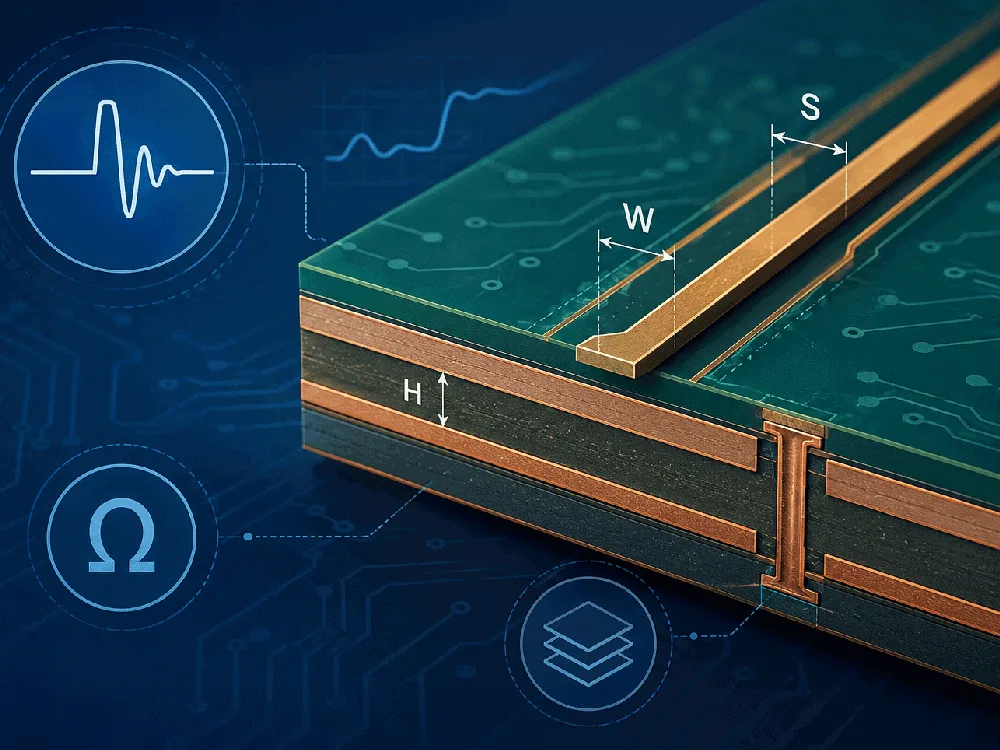
Aluminum vs FR4: Which Is Better for High-Current Designs?
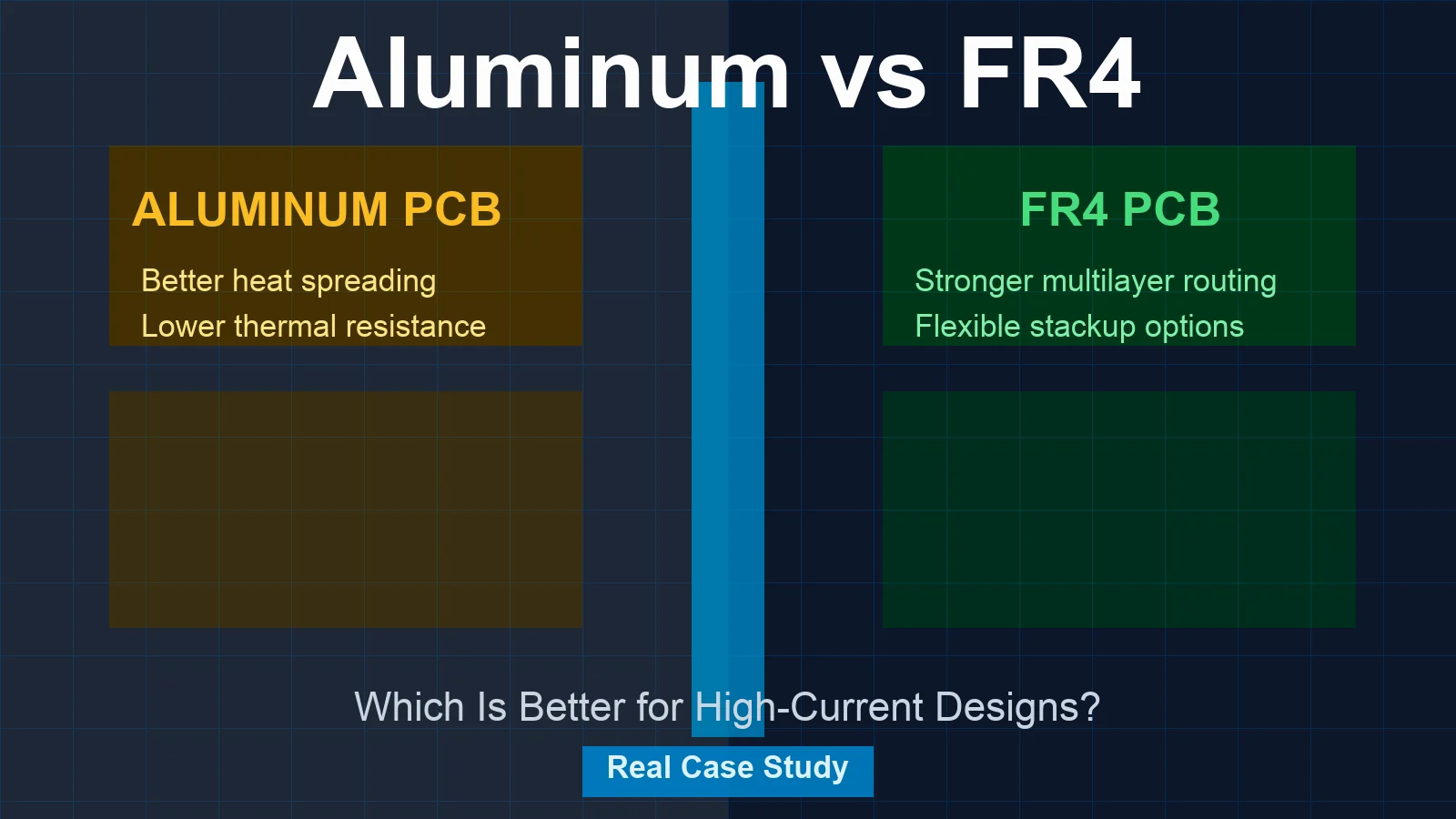
In an aluminum vs FR4 comparison, aluminum PCB is not always the better choice for high-current designs. In many real-world cases, especially with double-sided layouts, an optimized FR4 PCB offers better thermal performance. It also increases manufacturing yield and ensures more stable assembly results.
Read More>>PCB Surface Finishes Guide (2026)
Choosing a PCB surface finish is one of the most important decisions in board manufacturing. It affects soldering quality, assembly yield, long-term reliability, and total product cost.
Read More>>Prepreg and Core in PCB: Differences, Stackup Design, Material Selection, and Manufacturing Impact
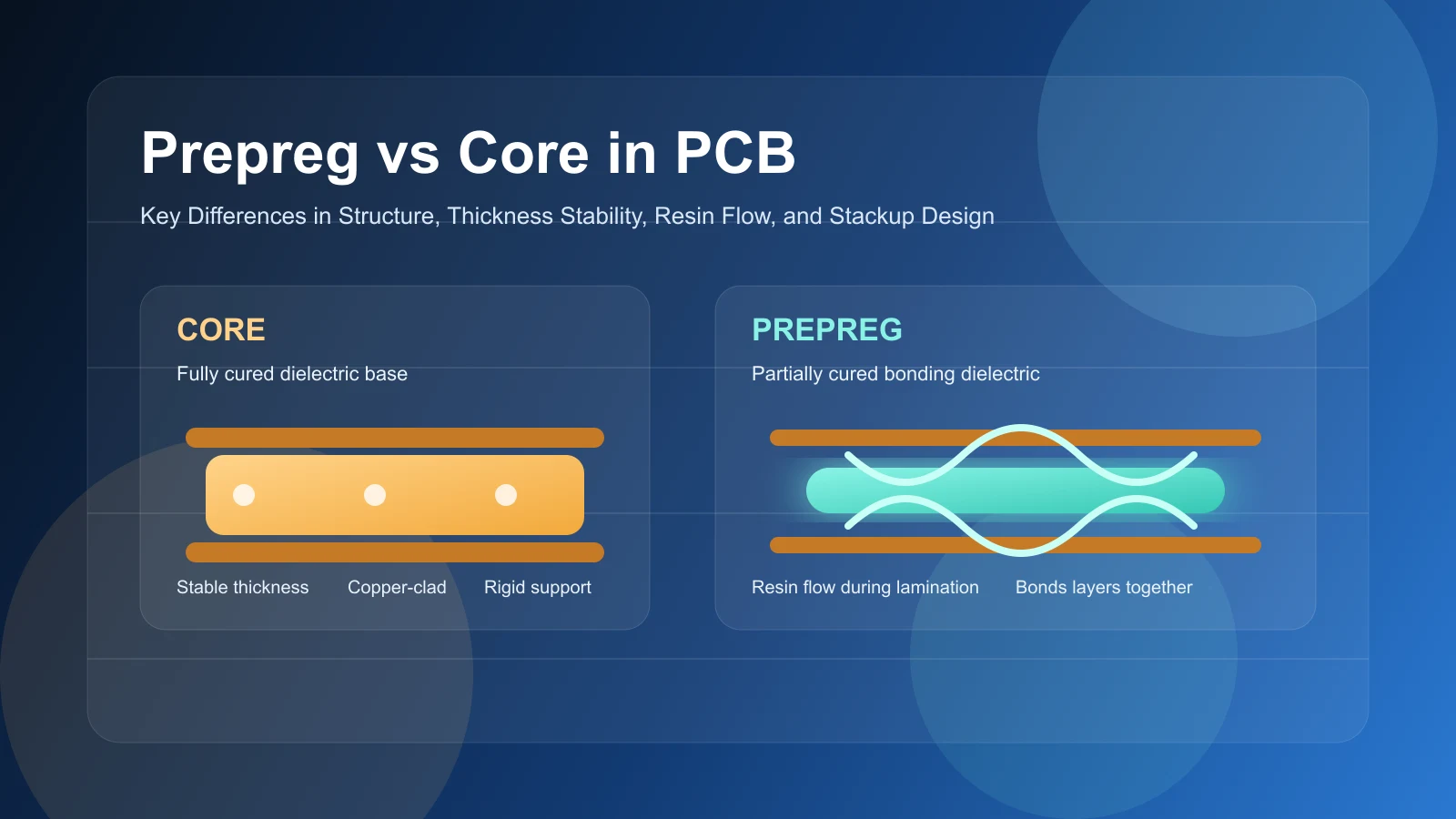
If you make multilayer boards, controlled-impedance designs, HDI boards, you need to learn more. You also need to know how core and prepreg affect final pressed thickness, signal integrity, resin flow, yield, cost, and lead time.
Read More>>The Comprehensive Guide to FR-4 PCB: Properties, Types, and Material Selection

What is FR-4 Material? FR-4 is the most widely used sub […]
Read More>>Guidelines for Designing Rigid-Flex PCBs for High-Performance Applications
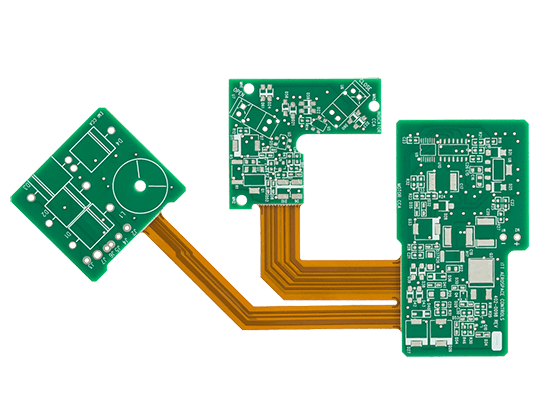
Rigid-Flex PCB is a type of printed circuit board that combines rigid and flex circuit technologies. It offers the mechanical strength of rigid PCBs and the bendable, foldable features of flexible circuits. As electronic products become smaller, lighter, and more powerful, the importance of Rigid-Flex PCBs in modern electronics is growing.
Read More>>The Ultimate 8-Layer PCB Stackup Guide for High-Speed Design
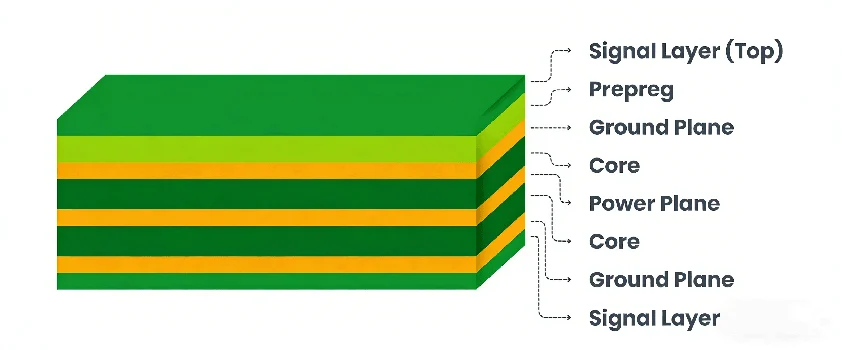
Introduction A well-designed 8-layer PCB stackup can im […]
Read More>>2-Layer vs 4-Layer PCB: Which One Should You Choose?
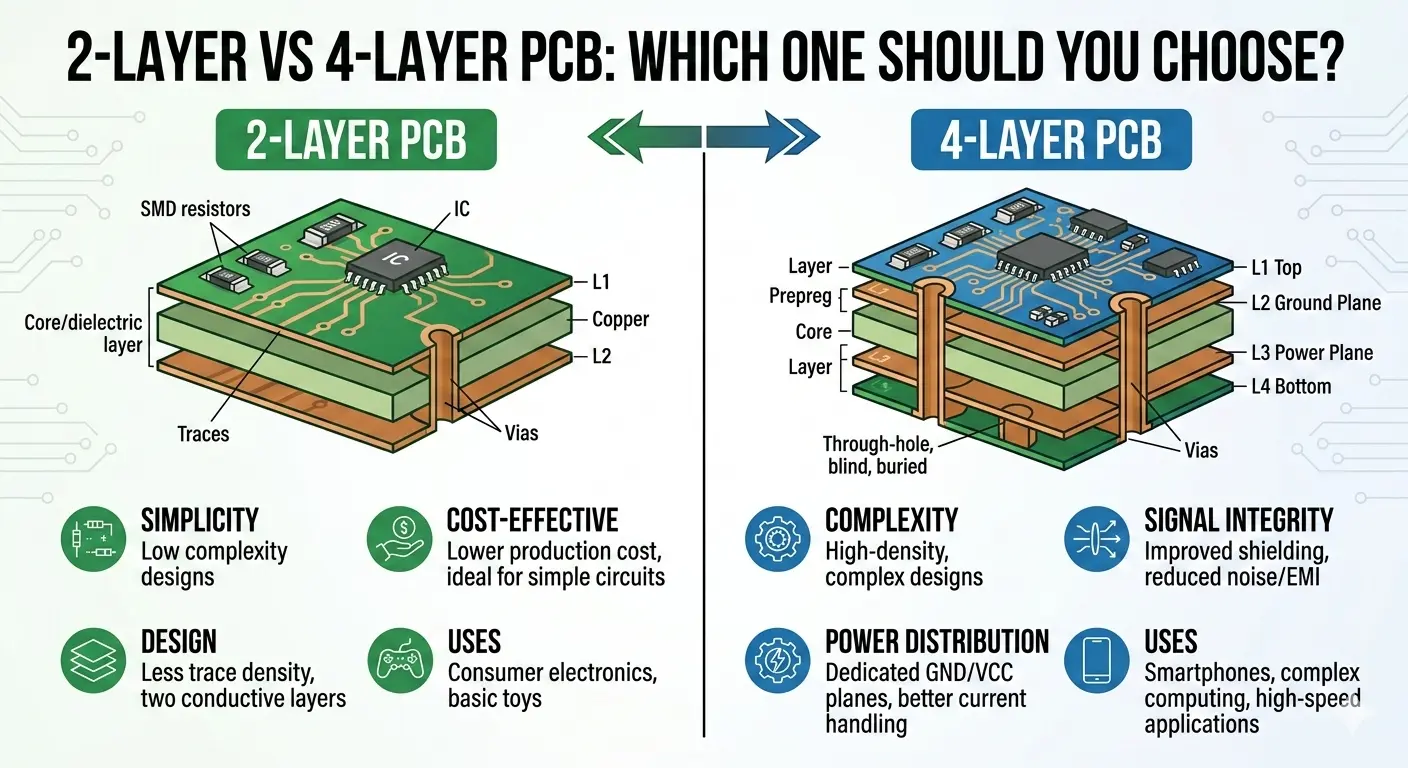
Printed circuit boards(PCB) can have different layer counts depending on the circuit's complexity and performance needs. 2-layer and 4-layer PCBs are the two most common types. Understanding their differences in structure, performance, and cost will help engineers choose the best solution for any electronics project.
Read More>>PCB Stackup Design Guide for Multilayer Boards
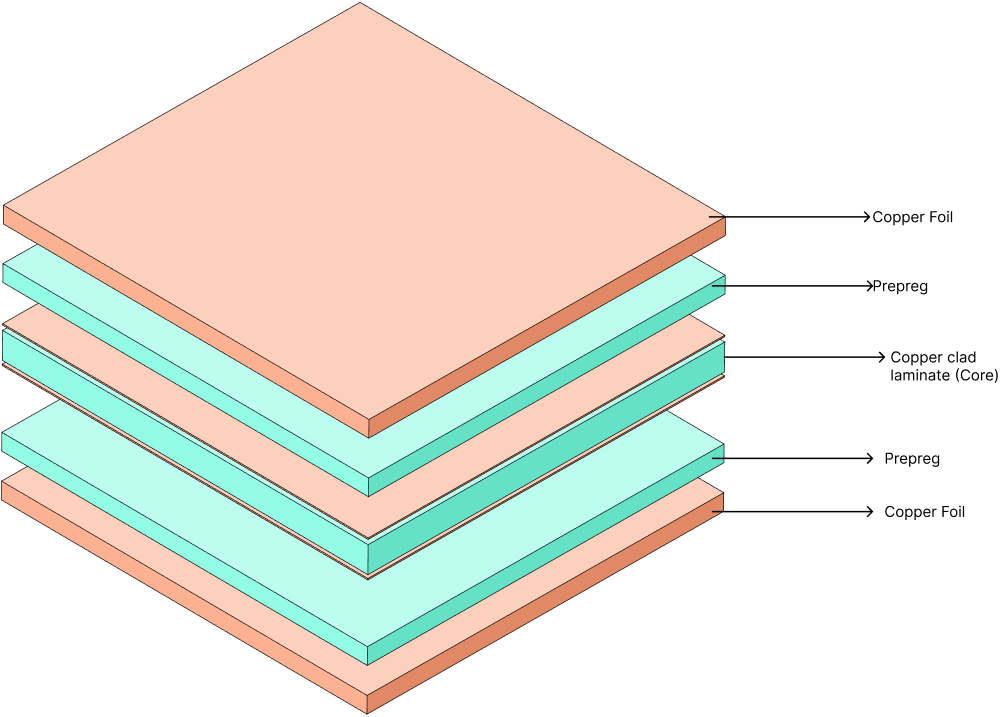
PCB stackup design is not just about arranging copper layers. It affects signal integrity, power stability, EMI control, heat management, board thickness, cost, and manufacturing reliability.
Read More>>Ultimate Guide to Impedance Control