
PCB Materials: A Guide for PCB Design and Manufacturing
 steve ran
May 4, 2026
steve ran
May 4, 2026
PCB material affects how a circuit board works, lasts, and performs in real use. Designers and buyers should not choose PCB material only by price. They should also consider electrical performance, heat resistance, signal speed, layer count, and the copper thickness.
This guide explains the main parts of a PCB material system. It also covers PCB material types, key properties, common uses, and selection tips for PCB design and manufacturing.
Main Parts of a PCB Material System
A PCB material system includes more than one material. Each part affects PCB performance and manufacturing quality.
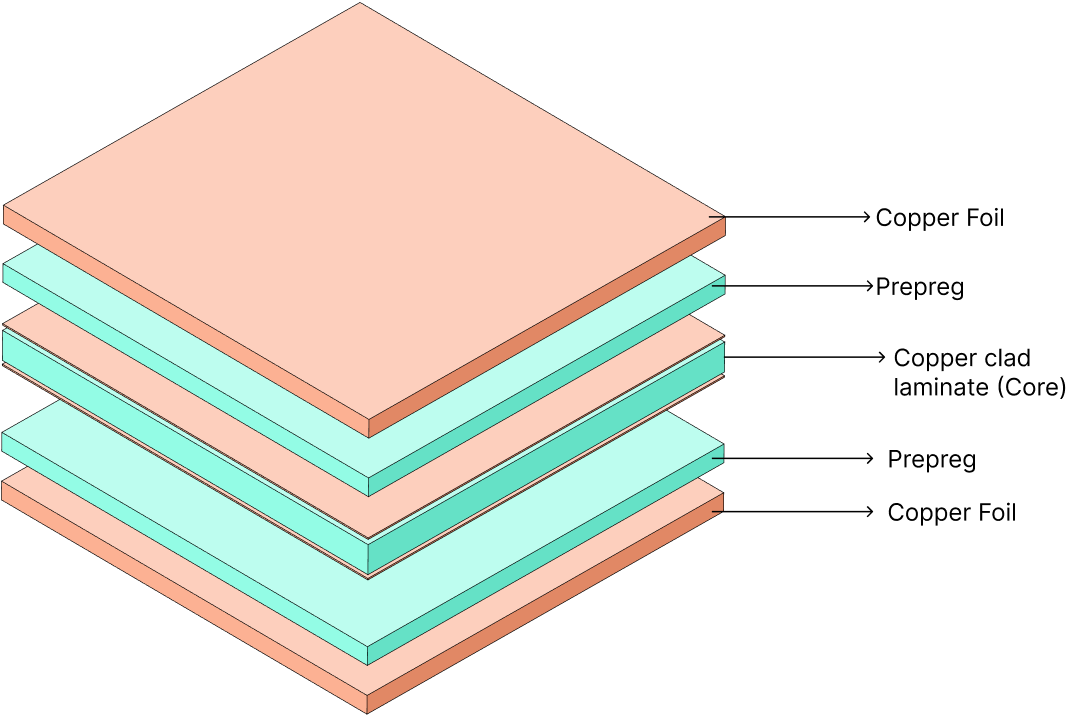
Common parts include:
- Substrate
- Copper foil
- Prepreg
- Core
- Solder Mask
Each part has a different job. The substrate supports the board. Copper carries current and signals. Prepreg bonds layers together.
1. Substrate / Base Material
The substrate is the main insulating material of the PCB. It gives the board mechanical support and keeps copper layers separated. Many engineers also call it the PCB substrate material or PCB base material.
Common PCB substrate material options include:
- FR-4
- Polyimide
- PTFE
- Ceramic
- Aluminum base
- Copper base
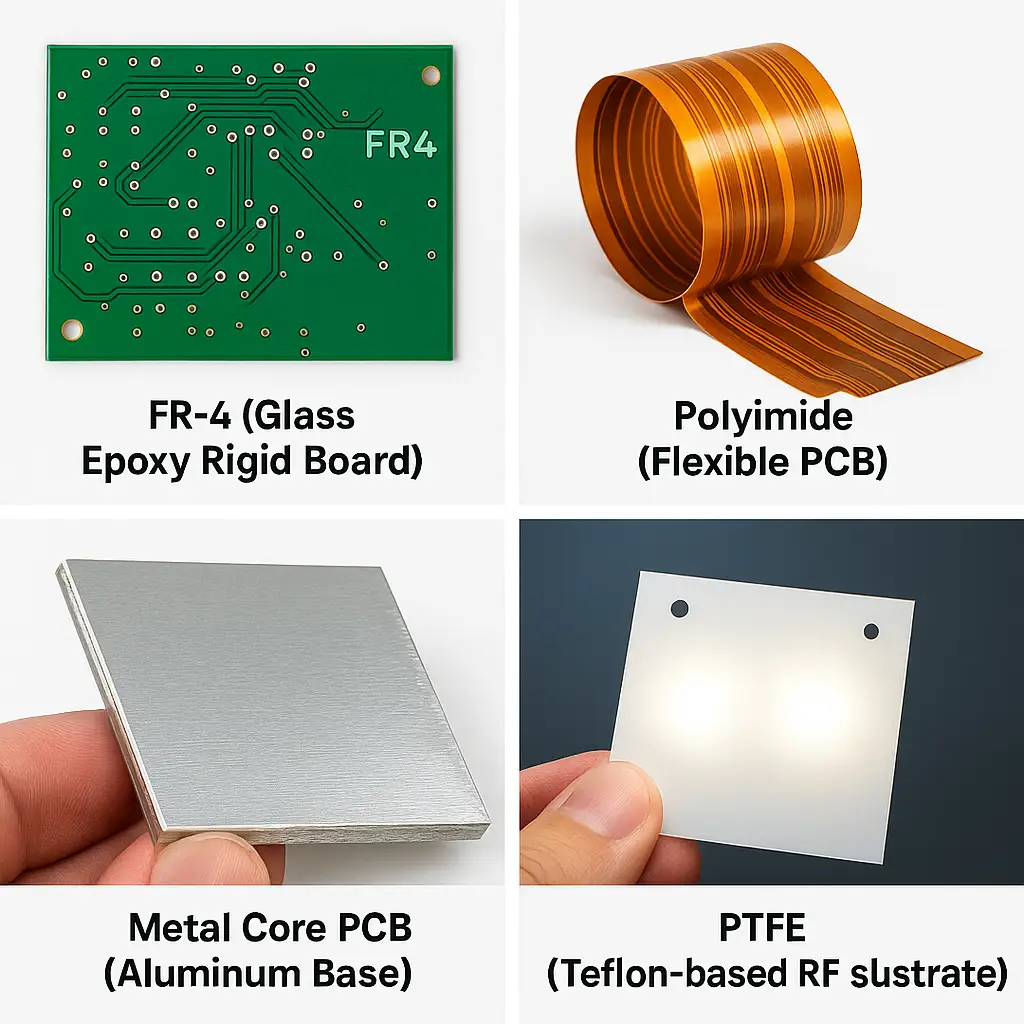
FR-4 works well for many standard circuit boards. Polyimide works well for flexible PCB material. PTFE and Rogers materials work well for RF and microwave boards. Ceramic and metal base materials work well for thermal control.
For high-current designs, engineers often compare FR-4 and aluminum PCB materials. You can read this guide for more details: Aluminum PCB vs FR4: Which Is Better for High Current?
2. Copper Foil
Copper foil forms the conductive circuit on a PCB. PCB factories bond copper foil to the substrate. Then they etch the copper to create traces, pads, and copper planes.
3. Prepreg and Core
Prepreg and core play a key role in multilayer PCB stackups.
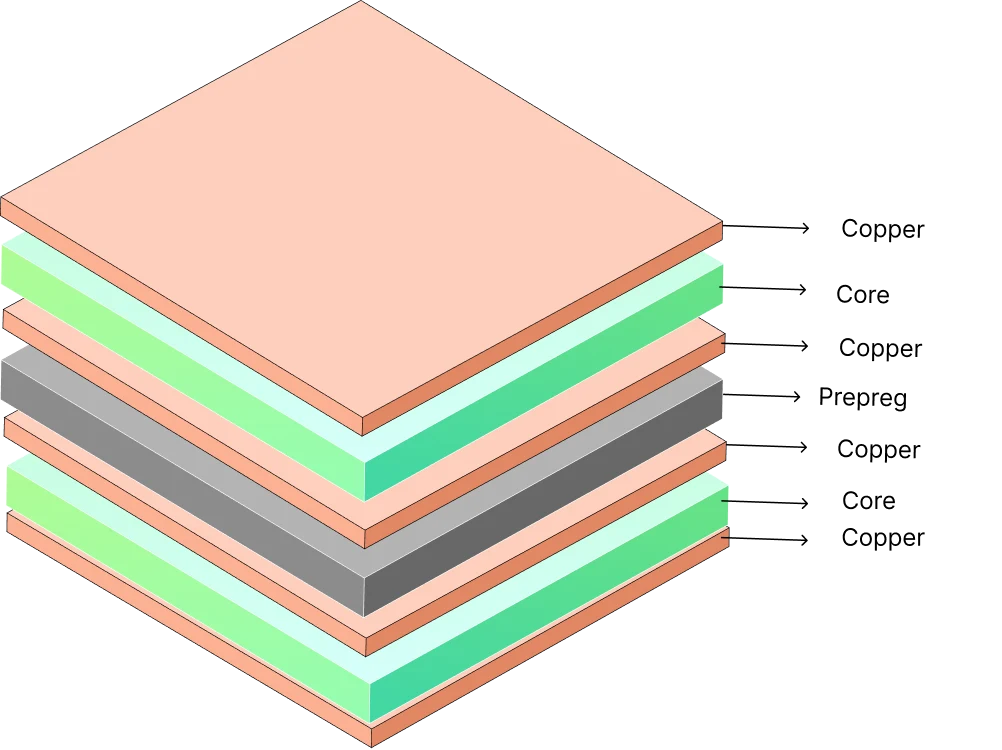
Prepreg is a resin-rich fiberglass material. PCB factories place it between cores or copper layers. During lamination, heat and pressure melt the resin. The resin then bonds the layers together.
Core is a cured laminate with copper on one or both sides. It gives the PCB structure, thickness control, and stable layer spacing.
In multilayer PCBs, prepreg and core work together. They affect board thickness, impedance, dielectric spacing, and lamination quality.
For a deeper explanation, read this guide: Prepreg vs Core in PCB Manufacturing
4. Solder Mask
Solder mask protects the copper surface from oxidation . PCB manufacturers make this protective layer by coating the board with special materials, like LPI solder mask ink.
Common Types of PCB Materials
PCB factories use different PCB material types for different products. The right choice depends on temperature, signal speed, heat dissipation, current load, and budget.
Below are the most common types of PCB materials used in circuit board manufacturing.
FR-4 PCB Material
FR-4 is the most widely used PCB material. It uses woven fiberglass cloth and epoxy resin. It offers a good balance of cost, strength, insulation, and manufacturability.
FR-4 works well for:
- consumer electronics
- industrial control boards
- power supplies
- standard multilayer PCBs
- communication products
- general electronic devices
Many 2-layer, 4-layer, and standard multilayer PCBs use FR-4. Easy to process and source. It also supports many common PCB processes, such as drilling, routing, solder mask coating, surface finish, and assembly.
High-Tg FR-4 Material
High-Tg FR-4 has a higher glass transition temperature than standard FR-4. Tg is the temperature where the material begins softening.
High-Tg FR-4 offers better thermal stability. It also helps reduce the risk of warpage and delamination during lead-free soldering and multilayer PCB lamination.
High-Tg FR-4 works well for:
- automotive electronics
- industrial equipment
- multilayer PCBs
- high-reliability PCBs
- lead-free assembly
- products exposed to higher temperatures
Engineers often choose High-Tg FR-4 when a board needs more heat resistance. It also avoids costly RF or ceramic materials.
FR-4 may not meet the requirements of all PCB designs. High-frequency, high-speed, high-power, or high-temperature boards may require more advanced materials.
High-Frequency PCB Materials
High-frequency PCB materials support RF and microwave circuits. These materials offer stable dielectric properties and low signal loss.
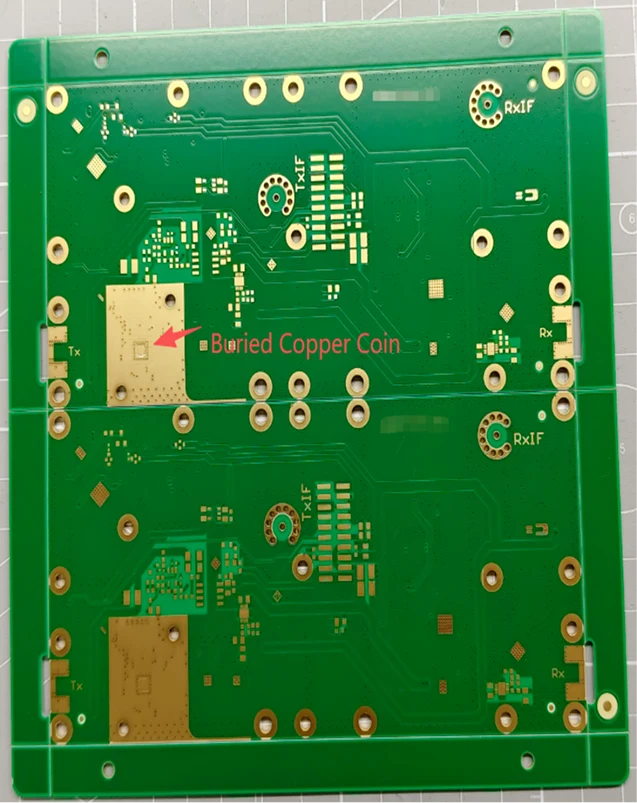
Common high-frequency materials include:
- Rogers
- Taconic
- PTFE-based laminates
- other low-loss laminates
Rogers PCB material is common in RF, microwave, and 5G applications. Engineers use Rogers PCB material when standard FR-4 cannot meet signal loss or dielectric stability requirements.
High-frequency PCB materials work well for:
- antennas
- radar systems
- RF modules
- microwave circuits
- 5G equipment
- satellite communication
- wireless communication devices
These materials often cost more than FR-4. They may also need special drilling, lamination, and handling.
Polyimide Materials
Polyimide is a flexible PCB material with good heat resistance. Its flexibility makes it suitable for compact products and bendable circuit designs.
Polyimide materials are common in:
- Flexible PCB
- Rigid-Flex PCB
- wearable devices
- medical devices
- aerospace electronics
- compact electronic products
- cameras
- sensors
Flexible PCB material must handle bending, folding, and movement. Engineers must also consider bend radius, copper thickness, adhesive type, and coverlay design.
Polyimide costs more than standard FR-4, but it gives designers more freedom in compact products.
Aluminum PCB Material
Aluminum PCB material is a common metal core PCB material. It uses an aluminum base to improve heat dissipation. A dielectric layer sits between the copper circuit and the aluminum base.
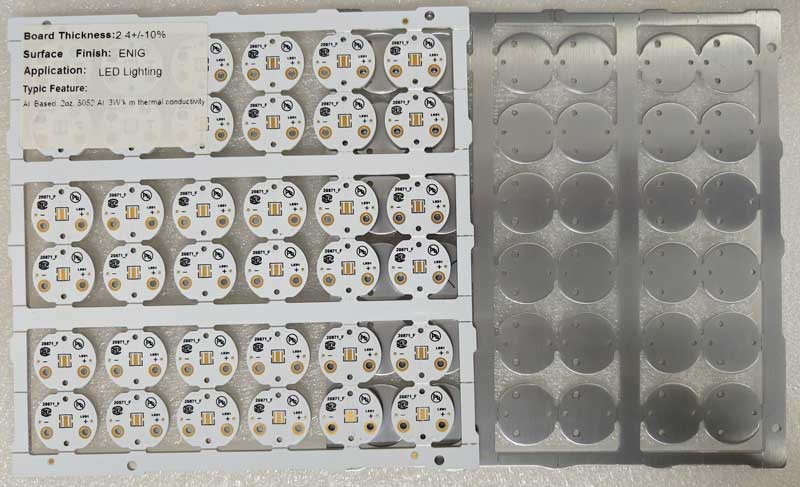
Aluminum PCBs work well for:
- LED lighting
- power modules
- automotive lighting
- thermal management applications
- power converters
- motor control products
The aluminum base helps move heat away from hot components. This can improve product life and reduce thermal failure risk.
Aluminum PCB material is common in single-sided metal core boards. More complex multilayer metal core PCB structures need more advanced manufacturing control.
Copper Base PCB Material
Copper base PCB material offers better thermal and current performance than aluminum base material. Copper conducts heat better than aluminum. It also supports high-power and high-current applications.
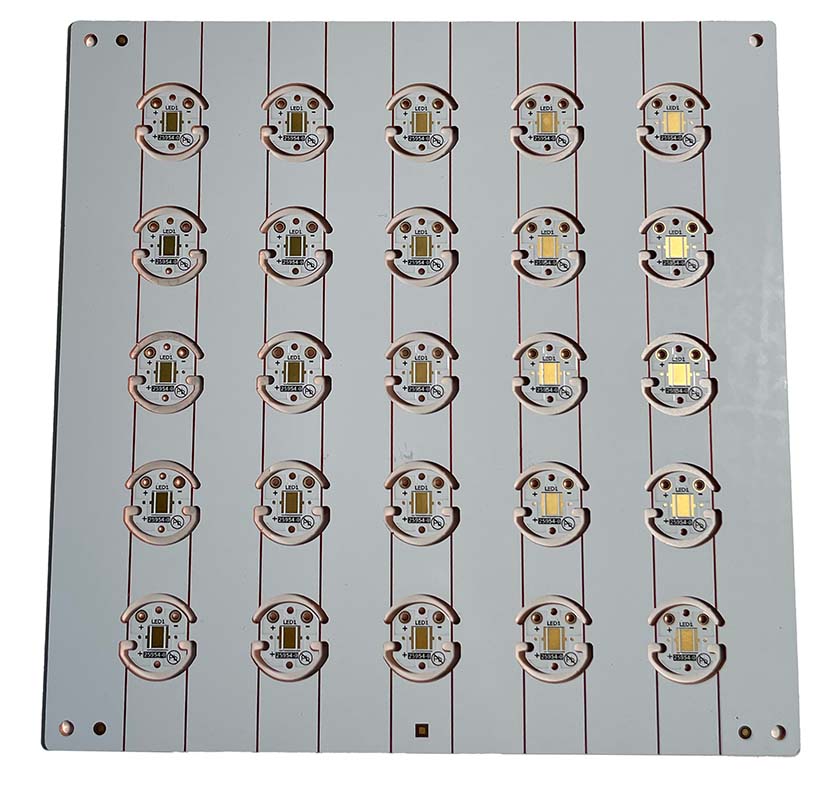
Copper base PCB material works well for:
- high-power electronics
- power conversion
- automotive electronics
- heavy copper PCB applications
- EV power systems
- industrial power modules
Copper base boards cost more than aluminum base boards. They are also heavier and more difficult to process. Engineers choose copper base materials when the design needs strong thermal performance and high reliability.
How to Choose the Right PCB Material
Choosing the right PCB material starts with the product requirements. Engineers should review operating temperature, signal speed, heat load, layer count, current level, and budget.
Choose Based on Operating Temperature
Standard FR-4 works for general electronics. It can handle many common consumer and industrial applications.
High-Tg FR-4 works better for high-temperature environments and lead-free soldering. It also supports many multilayer boards.
Extreme environments may require polyimide or ceramic. These materials handle heat better than standard FR-4.
Choose Based on Signal Speed
Standard FR-4 works for low-speed and general digital circuits.
Low-loss materials work better for high-speed digital designs. They help reduce insertion loss and signal distortion.
Rogers PCB material, PTFE, and other RF laminates work better for RF and microwave circuits. They provide stable dielectric behavior and lower signal loss.
Choose Based on Heat Dissipation
FR-4 works for normal thermal needs. It suits many control boards and standard electronic products.
Aluminum and copper base PCBs transfer heat better. They help remove heat from LEDs, power devices, and high-current components.
Heavy copper also helps with high current and thermal load. Wider traces, thicker copper, and thermal vias can improve current capacity and heat spreading.
Choose Based on Layer Count
Simple 1-layer and 2-layer boards often use standard FR-4. These boards do not need complex lamination.
Multilayer PCBs may need better dimensional stability. Stable prepreg and core materials help control layer alignment and board thickness.
High-layer-count PCBs often require High-Tg or low-CTE materials. These materials reduce the risk of warpage, via failure, and delamination.
PCB Material Comparison Table
| PCB Material | Main Benefit | Key Limit | Common Use |
|---|---|---|---|
| FR-4 | Good cost and performance balance | Not ideal for high-frequency use | General PCBs, multilayer PCBs |
| High-Tg FR-4 | Better heat resistance | Higher cost than standard FR-4 | Automotive, industrial, lead-free assembly |
| High-Speed Material | Lower signal loss | Higher cost | Servers, routers, backplanes |
| Rogers PCB Material | Stable RF performance | Higher cost and special processing | RF, microwave, 5G |
| PTFE | Low loss at high frequency | Harder to process | RF and microwave PCBs |
| Polyimide | Flexible and heat-resistant | Higher cost than FR-4 | Flexible and rigid-flex PCBs |
| Aluminum PCB Material | Good heat dissipation | Limited structure options | LED and power electronics |
| Copper Base Material | Strong thermal performance | Higher cost and weight | High-power electronics |
| Ceramic PCB Material | Excellent heat transfer and insulation | Expensive and brittle | Power modules, RF, medical electronics |
Cost and Manufacturing Considerations
PCB material choice affects both performance and price. Some materials are easy to process. Others need special drilling, lamination, or handling.
Key Factors Impacting PCB Pricing
PCB pricing depends on many factors, including:
- material type
- board thickness
- copper thickness
- layer count
- surface finish
- minimum trace and spacing
- via structure
- impedance control
- special processes
- production volume
Special materials usually increase cost. Fine traces, tight spacing, blind vias, buried vias, and controlled impedance can also increase manufacturing cost.
Material Compatibility with Advanced Processing
FR-4 has good manufacturability and supports most common PCB manufacturing processes.
PTFE materials require specialized drilling methods. They also need careful handling during production. Compared with FR-4, PTFE can deform more easily during processing.
Ceramic is more difficult to machine. It needs special equipment and process control.
Polyimide requires flexible PCB process control. The factory must manage bending, coverlay, adhesive, and copper fatigue.
High-layer-count PCBs need stable lamination materials. Good prepreg and core selection can improve layer alignment and reduce reliability risks.
Material Availability and Lead Time
Common FR-4 is usually easier to source. This helps reduce lead time and cost.
Rogers, PTFE, ceramic, and special high-speed materials may have longer lead times. Material stock can affect production schedules.
Engineers should confirm material availability before production. They should also confirm approved alternatives when the original material is not available.
Compliance and Reliability Requirements
Some products need specific compliance and reliability standards. These requirements can affect material selection.
Common requirements include:
- RoHS
- REACH
- UL
- IPC requirements
- lead-free soldering compatibility
- automotive reliability requirements
- medical reliability requirements
For high-reliability products, designers should confirm material grade, Tg, Td, CTE, and supplier documentation before mass production.
How HXD Supports PCB Material Selection and Manufacturing
Material selection can be complex. HXD supports a wide range of PCB material options, including:
- FR-4
- High-Tg FR-4
- high-speed laminates
- Rogers PCB material
- PTFE-based materials
- polyimide flexible PCB material
- aluminum PCB material
- copper base PCB material
Need Help Choosing PCB Materials?
In addition to helping you choose PCB material, we can also review your Gerber files, copper thickness, surface finish, and application needs.
Conclusion
PCB material selection affects electrical performance, heat resistance, signal loss, mechanical strength, reliability, and cost. A good material choice helps your PCB perform better in real applications.
Before production, engineers should compare PCB material properties like Tg, Td, Dk, and Df. They should also check CTE, thermal conductivity, moisture absorption, and copper peel strength.
The best PCB material is not always the most expensive one. The best choice is the material that matches your circuit design, working environment, manufacturing process, and budget.
FAQ
Frequently Asked Questions
What is the most common PCB material?
What is the difference between FR-4 and high-Tg FR-4?
Which PCB material is best for heat dissipation?
Is FR-4 suitable for multilayer PCB?
Which parts of a PCB can be recycled?
Copper is the main recyclable material in most PCBs. High-value metals are usually found in the surface finish, plated holes, and electronic components.