

High-frequency blank Library RFID Tag
Product Feature: The high-frequency blank library RFID tag is made for book identification, archive tracking, and asset management. Its PET or paper surface allows easy application on books, files, and library materials.
Chip Options: Supports NXP ICODE SLI, SLIX, SLIX2, and Fudan FM11RF series chips for strong compatibility.
Chip Specifications: Compliant with the ISO/IEC 15693 protocol, operating at 13.56 MHz. The typical reading distance is 30 cm to 1 meter, suitable for medium-range and fast identification.
Size Options: Standard sizes include 50 × 50 mm, 45 × 45 mm, 30 × 30 mm, and 40 × 15 mm. Custom sizes are available based on book specifications.
Customization: Supports printed serial numbers, barcodes, QR codes, and logos. Chip data can also be pre-written to meet asset management requirements.

RFID Library Tag Specifications
| Chip Model | NXP I CODE SLI X | ALIEN H3 |
| Product Size | 50 × 50 mm | 124 × 7 mm |
| Surface Material | Coated Paper / PET | Coated Paper / PET |
| Communication Protocol | ISO 15693 | ISO/IEC 18000-6C |
| Operating Frequency | HF 13.56 MHz | UHF 860–960 MHz |
| Memory Capacity | 1024 bits | EPC 96–480 bit, USER 512 |
| Operating Temperature | -20°C to 65°C | |
| Data Retention | More than 10 years | |
| Read / Write Cycles | More than 100,000 times | |
| Printing Process | Blank / Offset Printing / Digital Printing | |
| Packaging | 2,500 pcs / roll | 2,000 pcs / roll |
| Main Applications | Library management, asset management, and related applications | |
RFID Dry Inlay vs Wet Inlay
RFID dry inlay and RFID wet inlay are two common semi-finished forms used in RFID label production. Both include an RFID chip and antenna, but their structure and use are different.
Dry Inlay
An RFID dry inlay usually includes the chip, antenna, and substrate. It does not include an adhesive backing or release liner. Because of this, dry inlay is mainly used for further converting, such as RFID cards, tickets, labels, hang tags, or embedded RFID products.
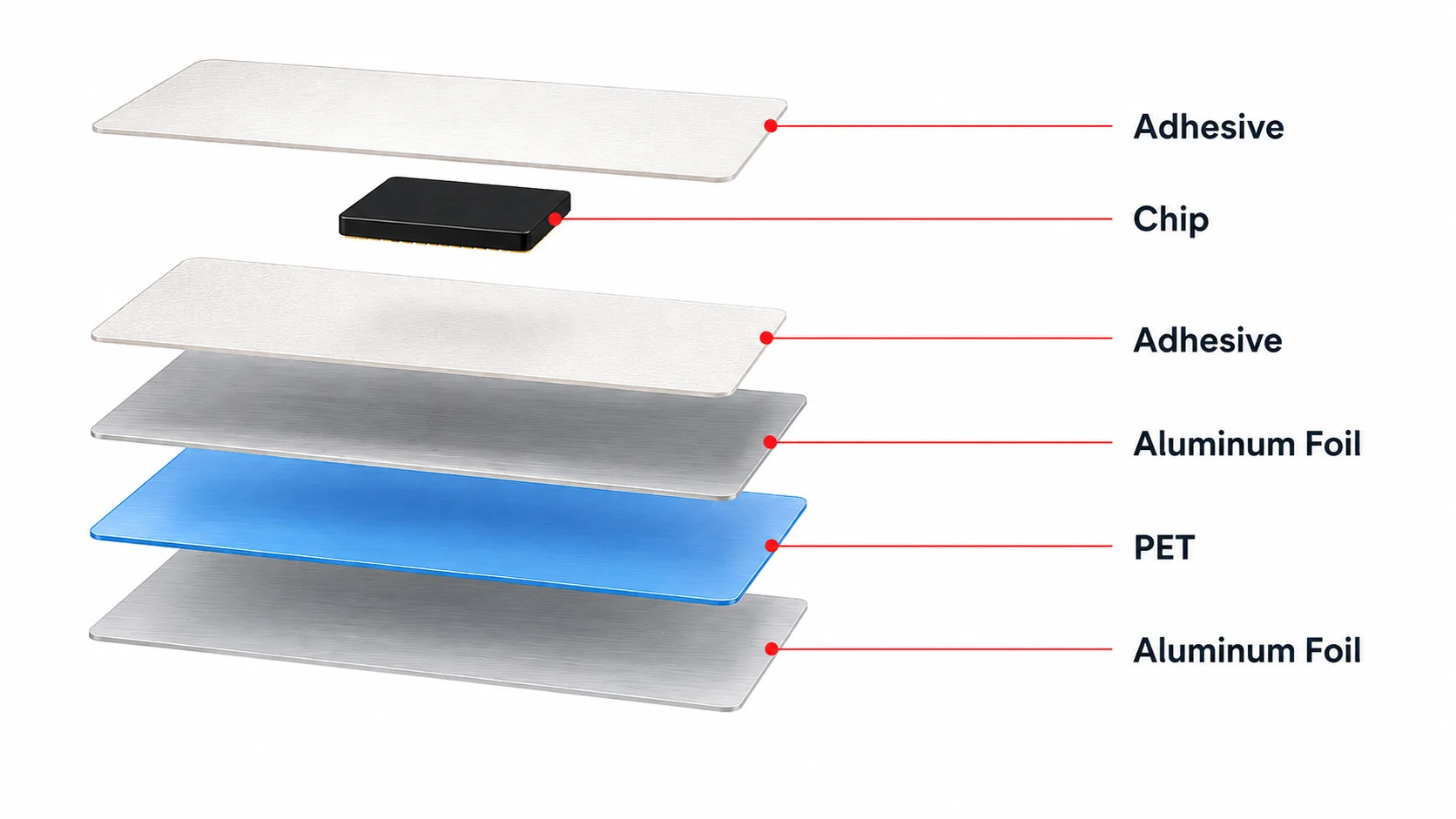
Dry inlay is a better choice when the RFID part needs to be embedded into another product or converted into a special label structure. It gives label manufacturers more flexibility in adhesive selection, face material, printing, and final label design.
Wet Inlay
An RFID wet inlay is based on a dry inlay, but it also includes an adhesive backing and release liner. This makes it easier to apply to products, packaging, books, files, or assets. It can also be converted into finished RFID labels or smart labels.
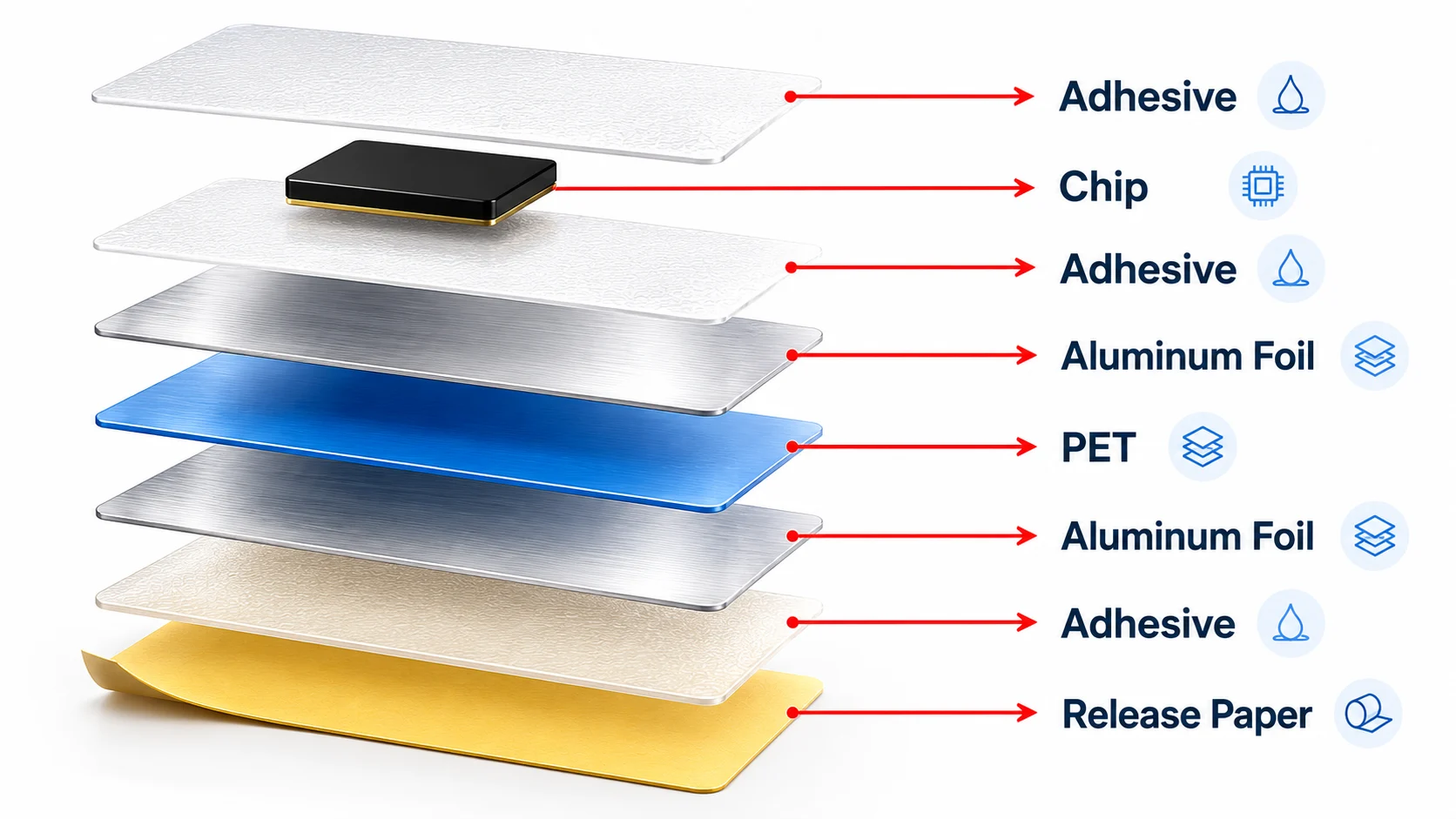
For high-frequency blank library tags, wet inlay is usually more practical. It already has adhesive and release liner, so it can be made into self-adhesive labels for books, archive files, and library materials.
Need custom RFID library tags?
Contact us for sizes, chips, printing, and bulk pricing.