How to Select a PCB manufacturer
 steve ran
September 28, 2026
steve ran
September 28, 2026
Many buyers choose a low-cost PCB factory during the prototyping stage. However, when the product design is final and ready for mass production, they may find the supplier lacks capacity.
At that point, they have to look for another PCB supplier.
Changing suppliers often means making prototypes again. PCB processes, material properties, and stack-up parameters may also change. These differences can affect the final product’s electrical performance. They may also require engineers to spend extra time testing and adjusting the design.
This article explains practical factors buyers should consider when choosing a PCB supplier.
This is especially important if the project moves from prototyping to mass production.
Check the PCB Manufacturer’s Experience and Qualifications
Start by checking the overall strength and qualifications of the PCB manufacturer.
Buyers should review factors such as:
- Registered capital
- Years in business
- Industry reputation
- Manufacturing licenses
- Quality certifications
- Production experience
Many well-established PCB manufacturers operate in the industry, including Shennan Circuits, Kinwong, Fastprint, JLCPCB, and HXD.
For example, HXD founded the company in 2005 and focuses on PCB prototyping and SMT assembly. The company has provided PCB manufacturing services for Huawei, Xiaomi, and other listed companies in China.
However, For technical PCB projects, manufacturing and engineering capabilities are even more important.
Evaluate PCB Manufacturing Capabilities
Most PCB factories can produce standard double-sided boards.
The differences between suppliers become much clearer when a project requires more advanced PCB technologies, such as:
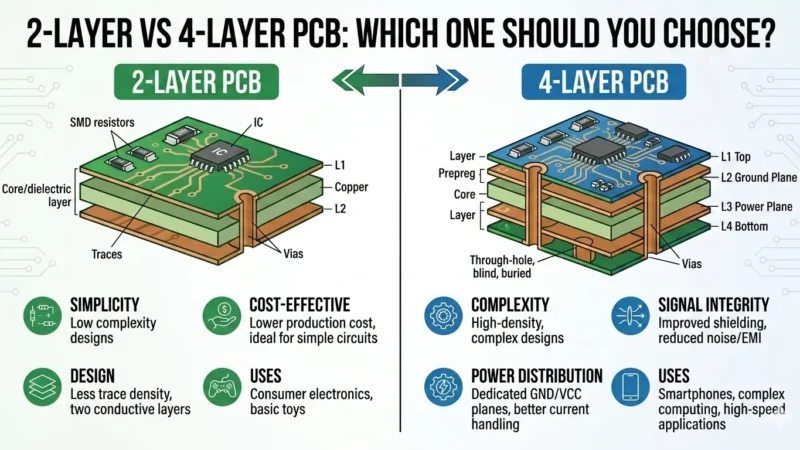
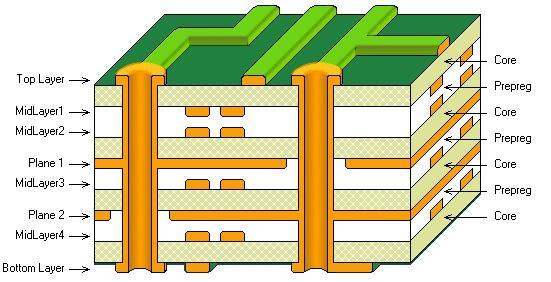
- 4-layer or multilayer PCBs
- Controlled impedance PCBs
- Heavy copper PCBs
- HDI PCBs
- Blind vias & buried vias
- High-frequency PCBs
For these products, the capability of the factory can directly affect product quality and reliability.
Important specifications include:
- Minimum trace width and spacing
- Minimum hole size
- Dielectric thickness control
- Available copper thickness
- Supported surface finishes
If your product may use high-speed signals in the future, make sure the supplier has experience with controlled impedance PCBs.
Ask whether the engineering team can calculate and compensate impedance based on the PCB stack-up. The factory should also have TDR impedance testing equipment to verify the finished boards.
For high-frequency PCB projects, buyers should also check whether the supplier has experience processing high-frequency materials.
Material storage, lamination control, and manufacturing methods can all affect impedance stability. A manufacturer with high-frequency materials experience usually controls issues like impedance variation from the fiberglass structure better.
Evaluate the Engineering Review Process
A reliable PCB supplier should not send your files directly into production without checking them first.
After receiving the production files, the engineering team should perform a detailed DFM, or Design for Manufacturability, review.
They should identify potential production risks and communicate with the customer before manufacturing starts.
Typical issues may include:
- Traces placed too close to pads
- Solder mask alignment risks
- Poor panelization design
- Hole or spacing limitations
- Manufacturing tolerances that may affect reliability
A good engineering team will discuss these issues with the PCB designer and recommend improvements before production.
This is much better than producing the boards first and only reporting problems after the prototypes fail.
A detailed and professional engineering review report is often a good indication of the supplier’s technical capability and sense of responsibility.
Lead Time and After-Sales Service
To receive qualified PCBs on time, buyers should also evaluate production speed and customer support.
Lead Time
You can often estimate a supplier’s production capacity by looking at its production lines, equipment, and manufacturing schedule.
Before placing an order, ask about the factory’s normal production lead time and its ability to handle urgent orders.
Useful questions include:
- What is the average lead time from order confirmation to shipment?
- How quickly can the factory handle prototype orders?
- Can the supplier support both prototypes and volume production?
- Can we add urgent orders to the production schedule?
A good PCB supplier should be flexible enough to change its production plan when customers have urgent needs.
This is especially important for projects with tight development schedules.
After-Sales Service
Technical support is another important factor.
The supplier should have a complete quality management system covering raw material purchasing, production control, and final inspection.
A professional PCB supplier should be able to provide support with:
- PCB design questions
- Manufacturing process optimization
- Production issues
- Material selection
Buyers should also check how quickly the supplier responds to questions and quality problems.
Understanding the supplier’s warranty, replacement, and return policies before starting cooperation is also useful.
Full-Process Quality Control
PCB quality control should not depend only on the final electrical test.
PCB’ s high quality comes from controlling the entire production process.
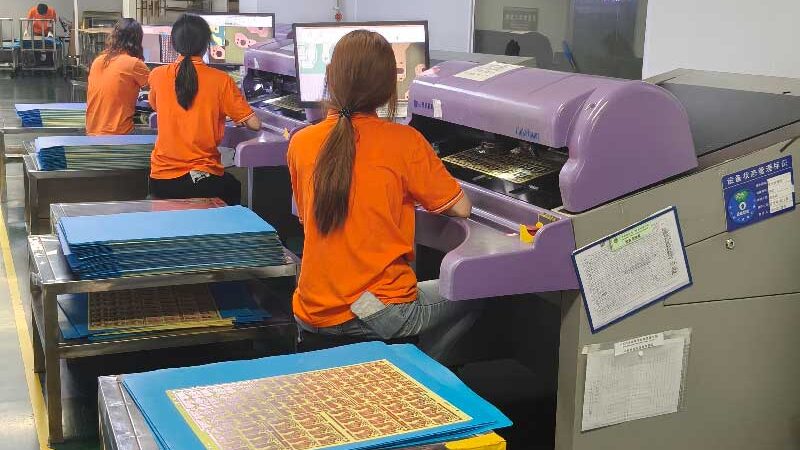
PCB manufacturing includes many different processes, such as:
- Inner layer imaging
- Lamination
- Drilling
- Copper plating
- Solder mask
- Surface finishing
- Routing
- Final inspection
Problems in any one of these processes can affect the reliability of the finished PCB.
When evaluating a PCB factory, buyers should first check the inspection and testing equipment available.
Important equipment may include:
- High-precision drilling machines
- AOI systems
- X-ray inspection equipment
- TDR impedance testers
These are important tools for producing high-precision PCBs.
The factory should also have a clear quality management process.
For example:
- Are complete production records kept for every batch?
- Can the factory trace production problems?
- Are defective products reviewed and analyzed?
- Are corrective actions implemented after quality problems occur?
These management systems are just as important as manufacturing equipment.
Check Quality Consistency Before Mass Production
During mass production, consistency between different batches is extremely important.
Some PCB manufacturers can produce good prototypes, but problems appear after the project enters volume production.
For example, different production batches may show:
- Solder mask color differences
- Impedance variation
- Dimensional differences
- Material differences
- Changes in electrical performance
These problems may indicate that the factory does not have stable process control for mass production.
If possible, buyers should arrange a small pilot production run after the prototype stage.
This allows the engineering team to check whether the supplier can maintain consistent quality across a larger production quantity.
Pilot production can also help identify possible risks before moving into full-scale manufacturing.
Conclusion
Choosing a PCB manufacturer is not simply about finding the lowest price.
Buyers should evaluate the supplier’s engineering capability, manufacturing limits, production capacity, DFM review process, quality control system, delivery performance, and technical support.
Most importantly, the supplier should be able to support the project from prototype to mass production.
A PCB manufacturer with stable materials, same quality standards, and strong quality control can lower engineering risk. It can also cut development time and make the move to volume production much smoother.